Insignia 65″ Class F50 Series LED 4K UHD Smart Fire TV
TCL 65 Inch T7 Series 4K 144Hz QLED Smart Google TV, 65T7
Hisense 65″ E7 Cinema Series Hi-QLED Mini-LED 4K UHD Smart Fire TV (65E7SF)
Best 65 Tv Buying Guide — Black Friday Deals 2026
A 65-inch 4K TV shortlist can look simple until you compare the display, refresh rate, HDR formats, connections and smart platform. These three options span a 60-hertz LED model, a 144-hertz QLED set and a 144-hertz Mini-LED set, so the useful choice depends on what you watch and which devices you plan to connect. For Black Friday, treat the listed model and its exact offer as a pair to verify: a similar product name is not enough to confirm that a deal is for the version you want. Start by deciding which features matter most, then compare the specifications and offer details rather than assuming a seasonal label guarantees a good fit.
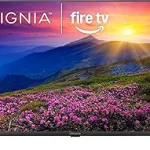
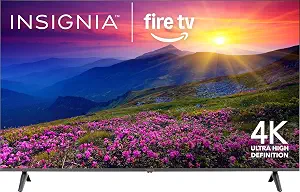
Insignia 65″ Class F50 Series LED 4K UHD Smart Fire TV
Check Price on Amazon
Best Budget is an editorial label for this shortlist, not a statement about its current price or a promise that it is the least expensive offer. The Insignia is a 65-inch 4K smart Fire TV with a 60-hertz refresh rate, HDR10 and a Direct LED backlight. Those details make it a straightforward comparison point if you want to keep the decision focused on a 4K screen and a familiar set of listed specifications. Consider the viewing and device needs you actually have; do not choose or reject it based on assumptions about an unlisted feature.
Its DTS Virtual-X audio specification is worth noting when you compare the sound-related details across your candidates. It does not, by itself, tell you how the set will sound in your room or with another audio device, so use your own intended arrangement as the reference. Three HDMI ports are listed. Count the devices you want to connect and decide whether that number suits your setup, rather than relying on a general impression of how many connections a TV ought to have.
The wall-mount pattern is VESA pattern 400 × 300. Check that exact notation against the mount you own or plan to buy; do not assume two mounts match just because their labels appear similar. For Black Friday, compare the offer’s model identity with the Insignia F50 Series listing and confirm the size and specifications attached to that offer. The Best Budget label can help shoppers who want an uncomplicated place to begin their comparison, but it does not establish a sale price or savings. If its 60-hertz refresh rate, HDR10, Direct LED backlight and three HDMI ports align with your priorities, weigh those facts against the other options and the actual offer details.
Key specs
| Screen size | 65 inches |
| Resolution | 4K |
| Refresh rate | 60 hertz |
| HDR format | HDR10 |
| Backlight | Direct LED |
| Audio | DTS Virtual-X |
| HDMI ports | 3 HDMI ports |
| Wall mount pattern | VESA pattern 400 × 300 |
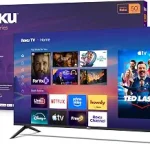
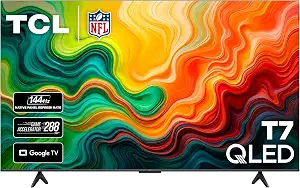
TCL 65 Inch T7 Series 4K 144Hz QLED Smart Google TV, 65T7
Check Price on Amazon
Best Overall is an editorial pick among these three sets, not a claim of measured superiority. This TCL combines a 65-inch 4K screen with a 144-hertz refresh rate and QLED display technology. That mix makes it a useful option to examine if your shortlist puts a higher stated refresh rate alongside 4K resolution. Before choosing it for a particular console, computer or other source, compare that source’s output and the TV’s connection details with the setup you intend to use; the specification alone does not establish compatibility.
The HDR checklist is broad: the listed formats are Dolby Vision, HDR10, HDR10+, HLG and Open HDR. If you already know which formats matter for the content you use, check those names against this list rather than treating the number of formats as a guarantee about how any particular title will look. Google TV is the listed operating system, so consider whether that is the smart-TV environment you want to use. Bluetooth and Wi-Fi are listed wireless technologies; the details do not specify how a particular peripheral or network will work in your home.
Four HDMI ports give you a concrete connection count to compare with your planned devices. Write down the equipment you expect to connect and check whether the available ports suit that arrangement, including any changes you anticipate. The listed VESA mount is 400 x 300 mm; compare that exact pattern with the mount you plan to use before ordering. For Black Friday, verify that the offer page identifies this T7 Series model and the same listed specifications. Its Best Overall label is a concise way to represent its combination of 4K, 144 hertz, QLED, Google TV and a broad set of named HDR formats—not proof that every buyer will prefer it.
Key specs
| Screen size | 65 inches |
| Resolution | 4K |
| Refresh rate | 144 hertz |
| HDR formats | Dolby Vision, HDR10, HDR10+, HLG, Open HDR |
| Operating system | Google TV |
| HDMI ports | 4 |
| Wireless technology | Bluetooth, Wi-Fi |
| VESA mount | 400 x 300 mm |
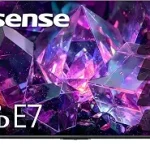
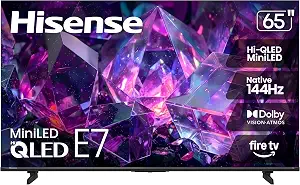
Hisense 65″ E7 Cinema Series Hi-QLED Mini-LED 4K UHD Smart Fire TV (65E7SF)
Check Price on Amazon
Best for Mini-LED is the editorial label for this Hisense because Mini-LED is its listed display technology. It is a 65-inch 4K set with a 144-hertz refresh rate, making it a distinct comparison for shoppers who want to consider both that display label and a higher stated refresh rate. The label does not promise a particular picture result: use it to identify the feature that differentiates this option, then consider your own content, sources and priorities before deciding.
The listed HDR formats are Dolby Vision, Dolby Vision IQ, HDR 10+, HDR10 and HDR10+ Adaptive. Compare these format names with the content and devices you plan to use, and verify relevant compatibility details for your setup rather than assuming every source uses every format. The model name identifies it as a Smart Fire TV, and FireOS is the listed operating system. That gives you a specific platform detail to consider alongside the display. A platform preference can help narrow a shortlist, but the supplied specifications do not describe every app or service, so check the offer details for the requirements that matter to you.
Four HDMI ports are listed, a useful number to compare with your intended connection plan. Note which devices you would connect and check the TV’s offer information for any connection detail you need beyond the port count. During Black Friday, confirm the listing is for the E7 Cinema Series model and not simply another set with a similar screen size or family name. This Best for Mini-LED designation is grounded in the provided display specification; it is not a market-wide award or a claim that Mini-LED is the right choice for every room. Compare it with the TCL’s QLED label and the Insignia’s Direct LED backlight in the context of the features you value.
Key specs
| Screen size | 65 inches |
| Resolution | 4K |
| Display technology | Mini-LED |
| Refresh rate | 144 hertz |
| HDR formats | Dolby Vision, Dolby Vision IQ, HDR 10+, HDR10, HDR10+ Adaptive |
| HDMI ports | Total Number of HDMI Ports 4 |
| Operating system | FireOS |
Set a priority order before comparing screens
Begin with a short list of jobs the TV needs to handle: everyday viewing, a particular group of connected devices, or use with a smart-TV platform you prefer. Then rank the specifications that could change your decision. In this group, resolution is 4K on all three, while the listed refresh rates separate the Insignia at 60 hertz from the TCL and Hisense at 144 hertz. Display terminology also differs: Direct LED, QLED and Mini-LED are the respective listed descriptions. Those distinctions help organize a comparison; they do not, on their own, establish which screen will look best for your content or room.
A practical Black Friday shortlist should preserve the exact model names and the features that matter to you. For example, note whether an HDR format is important, whether the smart-TV system is a preference, and how many HDMI connections your devices require. This keeps a tempting offer from becoming the whole decision. If two options both meet your essential needs, decide which additional specification is valuable enough to influence your choice. If a specification is not listed in the supplied details, avoid treating that gap as proof that the TV lacks the feature; check the actual offer information or product listing for clarification.
Treat refresh rate as a source-matching question
The refresh-rate figures are useful for narrowing candidates, but their value depends on the sources you plan to use. The Insignia lists 60 hertz, while the TCL and Hisense list 144 hertz. If you are considering a console, computer or another device, check its output specifications and the TV’s detailed connection information to confirm that the combination supports the use you have in mind. A refresh-rate figure by itself does not answer every compatibility question, and it should not be treated as a guarantee of a particular viewing result.
For Black Friday comparisons, keep the refresh rate attached to the exact model rather than relying on broad category language in an offer. The TCL and Hisense both have a 144-hertz specification, but their display technology, HDR format lists and operating systems differ. The Insignia presents another balance, with its 60-hertz specification alongside HDR10, Direct LED and DTS Virtual-X. Decide first whether refresh rate is a must-have, a preference or simply one item to record. That simple classification prevents a single prominent number from crowding out more relevant questions about connections, platform or the content you actually watch.
Use HDR names to check your sources
HDR format lists can help you compare a TV with the content and devices you intend to use. The Insignia lists HDR10. The TCL names Dolby Vision, HDR10, HDR10+, HLG and Open HDR. The Hisense names Dolby Vision, Dolby Vision IQ, HDR 10+, HDR10 and HDR10+ Adaptive. These are useful distinctions for a checklist, not a ranking of picture quality. If a particular format is important to you, verify that it is relevant to your source and content, and check the exact model listing for any details you need.
A Black Friday product page may present a model name and feature labels prominently, but take time to match the full model and the stated format list. Similar wording is not a substitute for confirming the exact set. Also consider how the HDR question fits into the whole purchase: it may be less important to you than a preferred operating system, a needed number of HDMI ports or a mount pattern that suits your setup. Avoid inferring that any product supports a format that is not listed here, or that a missing detail means the TV cannot use it. Verify uncertainties against the actual offer before deciding.
Map devices and mounting details to the room
Count the devices you intend to connect before choosing among the TVs. The Insignia lists three HDMI ports; the TCL and Hisense each list four. Compare those counts with your planned arrangement, and check the detailed product information for any connection requirements that matter to a specific device. A simple written list can expose a mismatch before checkout, especially if you expect to change your equipment later. Do not assume a port count describes port capabilities beyond what is actually specified.
Mounting deserves its own check. The Insignia lists VESA pattern 400 × 300, and the TCL lists 400 x 300 mm. Compare the notation supplied for the TV with the mount’s own requirements and instructions; do not silently treat different formatting as a confirmed fit. No mount pattern is provided here for the Hisense, so consult its actual listing if wall mounting is part of your plan. When considering a Black Friday offer, check that the model shown is the one whose connections and mounting details you have reviewed. That keeps the decision grounded in practical setup questions, not just the size shown in a headline.
Check the offer against the TV you meant to buy
A seasonal label is not enough to establish that an offer suits you. Confirm the exact model name, screen size and key specifications on the offer itself, then compare those details with your shortlist. If you are choosing between the three options here, look for the relevant distinction: the Insignia’s 60-hertz refresh rate and three HDMI ports, the TCL’s Google TV system and four HDMI ports, or the Hisense’s Mini-LED specification and FireOS. These details help identify the intended product without implying a price advantage or a particular sale outcome.
For a Black Friday decision, write down what would make you buy and what would make you pause. That could mean confirming the platform, checking a required HDR format, matching a mount pattern or verifying the model identifier. Compare the actual offer on those terms instead of relying on a discount claim, a similar product image or a shortened title. If a detail that matters is unclear, seek clarification from the listing before ordering. This approach also works when no offer is compelling: the specifications give you a basis for deciding whether to keep comparing or wait, without assuming that every Black Friday deal is worth taking.
Make your Black Friday choice
The right 65-inch TV here depends on which specifications solve your real needs: refresh rate, display technology, HDR formats, platform, ports or mounting. Use the labels as comparison tools, then confirm the model and details on the actual offer. Black Friday can be a useful moment to compare candidates, but the seasonal timing does not replace a careful fit check. Choose the set whose listed features and verified offer align with the way you plan to use it.