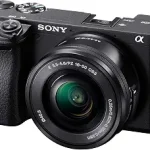
Sony Alpha a7 IV Mirrorless Camera with 28-70mm Lens Black (ASIN B0GKD355RW)
Best Sony Camera Buying Guide — Black Friday Deals 2026
What do you want your next Sony camera to make easier: framing yourself on video, carrying a compact APS-C kit, or working with a full-frame system? Those priorities point to different choices among these three listings. The ZV-E10 pairs an APS-C sensor with a 16-50mm lens and eye-focused autofocus; the a6400 also includes a 16-50mm lens and records 4K; the a7 IV combines a full-frame sensor, stabilization and a more detailed video specification. For Black Friday, compare the precise model and included lens shown in the offer rather than treating a headline as the whole deal. The right pick is the one whose listed features and kit match the jobs you actually plan to do.
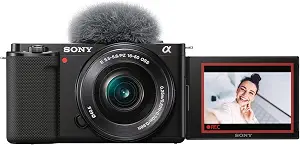
Sony ZV-E10 APS-C Mirrorless Camera with 16-50mm Lens Black
Sony ZV-E10 APS-C Mirrorless Camera with 16-50mm Lens Black (ASIN B0FLSPG85G)
Best Overall is the editorial fit for shoppers who want an APS-C camera kit with features suited to both stills and video. The ZV-E10 has a 24.2 mp APS-C sensor and comes with the Sony E PZ 16-50mm F3.5-5.6 OSS II lens. That gives you a specified lens in the package to consider alongside the camera, rather than leaving the lens choice entirely open. For everyday photos, family moments or personal video projects, this combination offers a clear starting point; whether its range suits your subjects is a decision to make around what you plan to frame.
For recording, the listed video resolutions are 1080p and 2160p. The camera also specifies 425-Point Fast Hybrid AF with Real-Time Eye AF and Tracking. Those details may matter if your intended routine involves keeping attention on a person while you compose, or moving between stills and clips. Its display is listed as 3 inches, and continuous shooting is specified at 11 frames_per_second. Treat those as concrete points to compare against your preferences, not a promise that every scene or workflow will suit you.
The Best Overall label reflects the combination of APS-C, an included zoom lens, stated video options and eye-focused autofocus among this shortlist; it is an editorial recommendation, not a measured award. Before a Black Friday purchase, verify that the offer is for this exact ZV-E10 package and that the included lens is the Sony E PZ 16-50mm F3.5-5.6 OSS II. A similar camera name or a different kit can change what arrives. Consider whether you need the listed video resolutions, whether the focus features address your subject matter, and whether this lens is the one you want to start with. If those answers line up, this is the balanced APS-C option to keep near the top of your shortlist.
Key specs
Sensor
Photo Sensor Size APS-C
Still resolution
Photo Sensor Resolution 24.2 mp
Kit lens
Sony E PZ 16-50mm F3.5-5.6 OSS II
Video resolution
Video Resolution 1080p, 2160p
Autofocus
425-Point Fast Hybrid AF; Real-Time Eye AF and Tracking
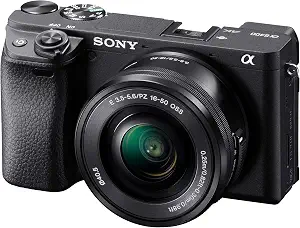
Sony Alpha a6400 Mirrorless Camera (ASIN B07MV3P7M8)
Best Budget is the label for the a6400 within this set, based on its listed APS-C format, included 16-50mm lens and 4K video specification. The label is a buyer-fit choice, not a claim about its current price or an assertion that it is the cheapest camera on the market. The listing identifies an APS-C sensor, a Sony E (NEX) mount and a 16-50mm lens. That is useful information when deciding whether the kit as presented matches the kind of photography you have in mind.
The a6400 records 4K (2160p), has a flip screen and specifies continuous shooting at 11 frames_per_second. Those features give it a distinct place beside the other APS-C choice here: its listed video resolution and screen format can be relevant if you want to frame yourself or capture clips as part of your routine. The listing does not provide the same detailed autofocus description as the ZV-E10 record, so compare only the features actually stated rather than assuming the cameras behave identically. Think about whether 4K and a flip screen are useful to you, and whether the included lens fits your intended subjects.
For Black Friday, check that the offer names the Sony Alpha a6400 and includes the 16-50mm lens shown in this listing. Do not infer a discount, bundle contents or price advantage from a promotional headline; the exact variant is what matters. The Best Budget label helps narrow the choice if you are seeking an APS-C kit with 4K video and a flip screen, but it does not guarantee a particular deal. If your priorities are those specific listed features, and the verified offer is for the kit you intend to buy, this model is a straightforward candidate. If another option’s stated features better fit your work, compare that exact package rather than choosing on the label alone.
Key specs
Sensor size
APS-C
Lens
16-50mm Lens
Mount
Sony E (NEX)
Video
4K (2160p)
Screen
Flip Screen
Continuous shooting
11 frames_per_second
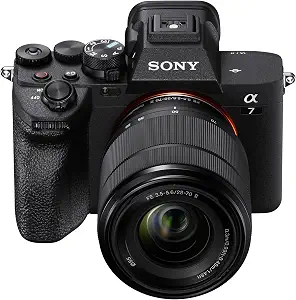
Sony Alpha a7 IV Mirrorless Camera with 28-70mm Lens Black
Sony Alpha a7 IV Mirrorless Camera with 28-70mm Lens Black (ASIN B0GKD355RW)
Best for full-frame video workflows is the editorial label for the a7 IV in this group. Its listed 33MP1 full-frame Exmor R back-illuminated CMOS sensor, sensor-shift image stabilization and video specification make it the most clearly defined full-frame choice here. It comes with the Sony FE 28-70mm f/3.5-5.6 OSS II Lens, so consider that included lens as part of the purchase rather than evaluating the camera body in isolation. Whether this combination fits your work depends on the framing and recording tasks you expect to handle.
The video listing specifies up to 4K 60p11 10-bit 4:2:2 with full pixel readout in all recording formats. That level of detail can help you compare the camera with a workflow that calls for those stated recording options; it is not a guarantee that the result will suit every production or editing process. Real-time Eye-AF is listed for humans, animals and birds for photo and movie. Together with sensor-shift stabilization, these are concrete features to weigh if your intended subjects and recording plans align with them. The included 28-70mm lens should also be assessed against the kinds of scenes you expect to frame.
This is not automatically the right choice just because it is the full-frame model. Its Best for full-frame video workflows label identifies a particular buyer fit among these three products, not a claim of overall superiority. During Black Friday, verify the exact a7 IV listing, including the 28-70mm lens, before comparing the offer with the APS-C kits. Make sure the stated video format, autofocus coverage and sensor-shift stabilization are features you have a reason to prioritize. If you mainly want a simpler APS-C kit, one of the other listings may align more closely with your intended use. If the a7 IV’s specified full-frame and video details match your workflow, it merits a focused comparison.
Key specs
Image sensor
33MP1 full-frame Exmor R back-illuminated CMOS sensor
Included lens
Sony FE 28-70mm f/3.5-5.6 OSS II Lens
Image stabilization
Sensor-shift
Video
Up to 4K 60p11 10-bit 4:2:2 w/ full pixel readout in all rec. formats
Eye autofocus
Real-time Eye-AF for humans, animals, birds for photo and movie
Map the camera to the finished task
Start with the result you expect to make, not with the longest specification line. If you want one camera kit for stills and clips, compare the ZV-E10’s 1080p and 2160p options, the a6400’s 4K (2160p) listing and the a7 IV’s more detailed recording specification against your actual plans. Those descriptions are not interchangeable, and the a7 IV’s stated up to 4K 60p11 10-bit 4:2:2 format may be relevant only if your recording workflow makes use of it. A simpler need may not justify choosing around a more advanced-sounding line.
For still photography, look at the sensor details and the features that connect to your subjects. The ZV-E10 specifies 24.2 mp on an APS-C sensor, while the a7 IV lists a 33MP1 full-frame Exmor R back-illuminated CMOS sensor. The a6400 listing identifies APS-C without providing a still-resolution figure in the supplied details. Avoid filling that gap with assumptions. Instead, decide which information is essential to your choice and check the complete product details for the exact listing if you need more.
Use Black Friday as a moment to compare fit, not a reason to change your requirements. Write down the main kinds of photos or clips you expect to make, then mark which listed features support those tasks. A camera can be a poor match even when its specification sounds impressive if the included lens or recording options do not serve your intended work. Keep the final choice tied to the outcome you want, and treat any offer as a separate question from whether the camera itself belongs on your shortlist.
Black Friday: verify the kit before comparing offers
Camera names can be similar while the package being offered differs, so begin by matching the precise model in the listing. For the ZV-E10, confirm the Sony E PZ 16-50mm F3.5-5.6 OSS II lens. For the a6400, confirm the 16-50mm lens. For the a7 IV, check for the Sony FE 28-70mm f/3.5-5.6 OSS II Lens. These are the included lenses specified for the products here; a headline alone does not establish which variant is in a particular offer.
Then compare the full terms and contents displayed for each exact listing. Do not assume a Black Friday label means that a promotion is active, that a particular price is favorable, or that accessories are included beyond what the listing states. Keep notes on the model, lens and any other package details you can verify directly. If a page presents more than one option, make sure the selected variant is the one you meant to compare before you decide.
This process is especially useful when comparing the APS-C kits with the full-frame package. Their included lenses have different names, and the sensor formats differ, so a surface-level comparison may not describe equivalent purchases. Focus on the exact product and its stated contents, then judge whether those contents suit your work. A careful Black Friday comparison can prevent a mismatch between the camera you researched and the package you actually intended to select.
Let the included lens guide your framing decision
An included lens affects how ready a kit is for the scenes you want to photograph or record, so keep it in the decision alongside the camera body. The ZV-E10 package specifies a Sony E PZ 16-50mm F3.5-5.6 OSS II, the a6400 listing includes a 16-50mm lens, and the a7 IV package specifies a Sony FE 28-70mm f/3.5-5.6 OSS II. Those are the lens details available here; they are not a basis for assuming identical framing, performance or compatibility beyond what is stated.
Ask yourself what you tend to put in the frame. A single included zoom may be a practical starting point if its stated range suits the scenes you have in mind. If you already have a more specific type of subject or composition planned, pause and check whether the listed kit lens is appropriate before buying. Do not treat a lens name in a broad camera headline as proof that the same lens is included in every variant.
When checking a Black Friday offer, read the camera and lens together as one purchase. Confirm the exact lens wording and selected package, and decide whether that combination is the one you want to begin with. This is a better comparison than assuming a kit is more complete because it appears in a promotion. If you cannot verify the included lens from the offer details, do not treat it as confirmed; compare the listing that clearly matches your intended setup.
Choose focus and screen features for your routine
Autofocus specifications are most useful when connected to the subject you expect to follow. The ZV-E10 lists 425-Point Fast Hybrid AF with Real-Time Eye AF and Tracking. The a7 IV lists Real-time Eye-AF for humans, animals and birds for photo and movie. The supplied a6400 details do not spell out a comparable autofocus description, so avoid assuming its system is the same or different on that basis alone. If autofocus behavior is central to your decision, consult the exact listing details for the product you are considering.
Think through the moments that make focus demanding for you: a person moving through a scene, an animal you want to keep in view, or a clip where you need attention to remain on a subject. The listed focus features give you specific points to compare with those tasks, but they do not promise a particular result in every situation. Base your shortlist on the kinds of subjects and framing you expect rather than treating a feature name as a universal guarantee.
Screen preferences are another practical distinction. The a6400 is listed with a flip screen, while the ZV-E10 lists a 3 inches display. These descriptions provide different kinds of information, so do not infer more about screen movement from the ZV-E10’s size detail. Consider whether a flip screen matters for the way you compose, and check the full specifications if screen positioning is a deciding factor. During Black Friday, compare that feature on the exact variant instead of relying on a generic model title.
Balance sensor format with the listed stabilization
The sensor format gives this shortlist a clear point of separation. The ZV-E10 and a6400 are APS-C models, while the a7 IV specifies a full-frame sensor. Pick a format deliberately: consider which camera best matches the work you want to do and the kit you want to own, rather than assuming one format is automatically the right answer. The supplied product details do not establish every difference in handling or image results, so keep the decision tied to facts you can verify.
The a7 IV also specifies sensor-shift image stabilization. That is a concrete feature to weigh if it matters to your photography or recording plans. It is not listed among the supplied facts for the other two cameras, which does not establish whether a feature is present or absent in their complete specifications. Compare claims carefully and avoid turning a missing detail into a conclusion. If stabilization is essential, verify the complete listing for the exact camera variant before making it a deciding factor.
A Black Friday shortlist can stay manageable if you choose a format, an included lens and a small set of must-have features first. Then compare the offers that meet those requirements. The a7 IV’s full-frame sensor and sensor-shift stabilization may make it the relevant option for a buyer seeking those specifics; the APS-C models may better match someone choosing between their listed kit and video features. The point is not to rank formats universally, but to make a purchase whose details fit your own intended tasks.
Make your Black Friday choice
Before checkout, confirm the exact model, sensor format and included lens; check that the selected variant matches the package you compared; and revisit the video, autofocus, screen or stabilization details that mattered most to you. For Black Friday, judge the offer from the current listing rather than assuming a promotion or bundle from its headline. The ZV-E10 is the broad APS-C fit here, the a6400 is the APS-C option with a listed flip screen and 4K video, and the a7 IV is the full-frame choice with specified video and sensor-shift stabilization. Choose the kit that supports your planned work, not simply the one with the most appealing label.