Best Oled Monitor Buying Guide — Black Friday Deals 2026
An OLED monitor shortlist is most useful when it starts with the tasks and preferences you can actually name: a QHD gaming display, a particular screen finish, or a specific adaptive-sync listing. The options here include OLED and QD-OLED models, with shared resolution and motion figures in some cases but meaningful differences in surface and listed features. Treat the Best Overall and Best Budget labels as editorial ways to organize these choices, not evidence of measured superiority. During Black Friday, compare the exact model and configuration attached to an offer rather than assuming a discount or promotion. The goal is to find a screen whose documented details fit your priorities, then verify the offer terms before deciding.
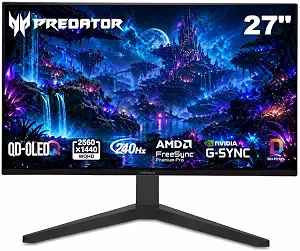
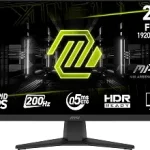
The Acer Predator X27U W1 earns the Best Budget label in this selection, but that is an editorial category choice—not a promise that it has the lowest current price or a particular Black Friday discount. Its listed combination is a 26.5-inch QD-OLED display, 2560×1440 resolution, and a 240-hertz refresh rate. These details make it a relevant option for someone seeking a QHD gaming monitor with QD-OLED identification and a matte finish. Compare the actual offer and configuration rather than reading the label as a market-wide price claim.
Acer lists a 0.03-millisecond response time and FreeSync Premium adaptive sync. These specifications may help you build a focused comparison with the LG and Samsung entries, which also list a 240-hertz refresh rate and 0.03-millisecond response time. Sync qualifications are not identical across the three records, so check which named feature matters for your setup instead of treating the entries as interchangeable. The Acer listing identifies two HDMI ports; if those connections matter, verify that the offer is for the exact X27U W1 configuration described.
The matte screen finish is a meaningful point of distinction if you prefer to shortlist matte models. Samsung is also listed as matte, while the LG listing specifies glossy. The Acer’s QD-OLED description is another direct detail to weigh against the standard OLED label supplied for the LG. These words provide a basis for comparing the listings, but they do not establish which screen will look best in your room or suit every viewing preference. Consider the finish you want and confirm any additional specifications that are important but not included here.
For Black Friday, the Acer can serve as a practical comparison candidate if its listed size, resolution, refresh rate, surface, and sync feature align with your priorities. Best Budget here means the guide’s editorial choice among these products; it does not state that the offer is cheaper than competing listings or that a discount is active. Inspect the exact model name and configuration shown with the offer, then compare its terms with the other shortlisted monitors. If glossy is your preference or the LG’s listed sync details are a priority, that may change which one merits closer consideration.
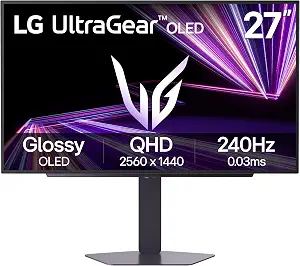
The LG 27GX704A-B is the Best Overall pick in this guide because its supplied specifications bring several commonly compared gaming-monitor details together: OLED, a 27-inch screen, 2560×1440 native resolution, and a 240-hertz refresh rate. That combination gives shoppers a clear starting point if they want to compare a QHD OLED option without choosing between those listed screen and motion figures. The label is an editorial selection among the featured products, not a claim that this monitor has been measured as superior. For Black Friday, use it as a useful reference point for checking the exact model and offer configuration.
Its response time is listed as 0.03 milliseconds, while adaptive sync is identified as FreeSync Premium Pro and G-Sync Compatible. Those are separate pieces of information to consider: the response-time figure describes one listed specification, and the sync names tell you which options the product record identifies. If either matters to your intended setup, verify the exact model and relevant configuration on the offer page before purchase; the supplied details alone do not establish how a particular system will behave. The two HDMI ports are another concrete detail to compare when reviewing the connections you need.
The screen finish is glossy, which makes surface preference an important part of this choice. If you specifically want a glossy screen, that is a direct reason to keep the LG on your shortlist. If you would rather compare against matte options, the Acer and Samsung listings provide that contrast. None of these finish labels establishes how the display will look in your particular room, so consider your normal viewing environment and verify any remaining details that matter to you. Black Friday browsing can make it tempting to focus on the offer first; keep the finish and exact model in view as you compare.
This pick suits a shopper who values the stated screen size, QHD resolution, OLED display type, and high-refresh specification together, and who wants the listed adaptive-sync qualifications considered as part of the decision. The record does not provide a price, promotion, stand details, or other specifications, so those should not be assumed from the product name. During Black Friday, compare the offer against the same model and configuration, and decide whether the documented details are a better fit for your priorities than the matte Acer or matte QD-OLED Samsung. The Best Overall label is a shortlist aid, not a substitute for that comparison.
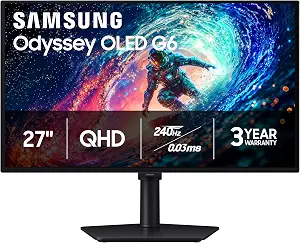
The Samsung 27-inch Odyssey OLED G6 (G61SH) is the Best for a matte QD-OLED shortlist choice. That label reflects two details in its product record: QD-OLED display technology and a matte screen finish. It is an editorial description of a useful shortlist role, not a tested performance award. The monitor is listed with a 27-inch screen and QHD Wide 1440p resolution, making it a relevant comparison for shoppers looking at QHD OLED gaming displays. During Black Friday, confirm that the offer names this model and variant before comparing it with the other entries.
Samsung lists a 240Hz refresh rate and a 0.03-millisecond response time. Those figures match the corresponding listed refresh-rate and response-time values for the Acer and LG in this guide, so they can help organize a feature-by-feature comparison. They do not tell you which monitor will be the better choice for your setup; use them alongside the technology, finish, and sync information. The Samsung record identifies FreeSync Premium as its adaptive-sync feature. Check whether that specific listing aligns with your needs rather than assuming that sync names on different products are equivalent.
The matte finish gives this entry a clear point of comparison with the glossy LG, while the Acer is also listed as matte and QD-OLED. If you have already decided that matte is the surface you want, the remaining comparison can focus on screen size, resolution wording, adaptive-sync listing, and the exact offer configuration. If the QD-OLED label is central to your shortlist, the Samsung and Acer both provide that description. The supplied details do not establish differences in image quality, brightness, or other qualities that are not specified, so leave those open for verification.
This model is a sensible Black Friday candidate for a shopper who wants to compare a matte QD-OLED monitor with a 27-inch QHD listing and a named FreeSync Premium feature. Its record does not provide an HDMI-port count, so do not infer one from the other products; check the exact offer details if connections are important to your decision. Compare the model name and configuration carefully, then weigh the stated features against your preferences. The Best for a matte QD-OLED shortlist label explains why it appears here without suggesting that it leads in a measured category.
Key specs
Screen size
27 inches
Display technology
QD-OLED
Resolution
QHD Wide 1440p
Refresh rate
240Hz Refresh Rate
Response time
0.03 milliseconds
Adaptive sync
FreeSync Premium
Screen finish
Matte
Start with the jobs your display needs to serve
A useful OLED monitor decision begins with the routine you want the screen to support, not with a seasonal offer. Think about whether your shortlist is primarily for gaming, whether you have settled on QHD, and whether screen surface or display technology is a strong preference. The featured products are all presented as gaming monitors, and each listing includes a 1440-class resolution, but their screen sizes, panel descriptions, finishes, and sync details are not identical. Write down which of those details matter most before opening Black Friday listings.
If you want a 27-inch screen, the LG and Samsung records use that size; the Acer is listed at 26.5 inches. The LG and Acer give the resolution as 2560×1440, while Samsung describes it as QHD Wide 1440p. Those are the supplied descriptions, so compare them as shown rather than assuming unlisted details. A stated screen size and resolution can help you narrow the field, but your desk arrangement and viewing preference remain personal considerations. Confirm the exact model and configuration presented with an offer.
Treat your intended tasks as a way to rank features, not as a reason to assume outcomes the product records do not establish. For instance, a shopper who has already chosen a matte surface can put the Acer and Samsung higher on a shortlist, while someone seeking glossy can examine the LG. If the offer is described as a Black Friday deal, check the product identity and terms separately. A clear priority list makes it easier to decide whether an offer is relevant instead of letting the promotion itself define what you need.
Read display technology alongside the surface
The product records distinguish OLED from QD-OLED and separately specify screen finish. LG is identified as OLED with a glossy finish; Acer and Samsung are identified as QD-OLED with matte finishes. These are useful comparison points because they let you build a shortlist around labels that are actually provided. They do not, on their own, establish which monitor has the image you will prefer. If a particular technology label or surface is important, confirm it on the exact product configuration attached to the offer.
Surface preference can be especially practical to settle before Black Friday browsing becomes busy. If you already want matte, the Acer and Samsung have that listed finish; if you are specifically considering glossy, the LG is the entry with that description. Think about where the display will be used and what surface you prefer, but do not infer room-specific results from a finish label. If your preference is not settled, keep both types in the comparison and avoid ruling out a model solely because a sale message gives it more prominence.
The two distinctions can also help organize your questions. First, decide whether you want to focus on OLED or QD-OLED as listed; then consider glossy versus matte as a separate preference. This avoids treating surface and display technology as one decision. Look closely at the product title and offer configuration so that a similarly named model does not replace the exact one on your list. When Black Friday offers appear, the strongest candidate for you is the one whose verified details match the priorities you chose, not necessarily the one with the most persuasive promotion.
Give motion and sync their own comparison lines
All three featured products list a 240-hertz refresh rate and a 0.03-millisecond response time. Those shared figures provide a straightforward basis for comparing the supplied motion specifications, but they do not establish an overall performance ranking or guarantee a particular experience. Keep refresh rate and response time as separate entries in your notes. That makes it easier to compare like with like and prevents one specification from standing in for the rest of a monitor’s fit.
Adaptive sync is a distinct comparison. Acer lists FreeSync Premium, LG lists FreeSync Premium Pro and G-Sync Compatible, and Samsung lists FreeSync Premium. If your setup makes a named sync feature important, verify the exact model and configuration before making a decision. Do not assume that two differently qualified labels mean the same thing, or that a product will behave a particular way with your system based only on these records. Check the relevant requirements for your intended devices.
This separation is useful when weighing Black Friday options because a sale page can foreground one attractive specification while leaving other questions unanswered. Compare the refresh rate, response-time figure, and sync listing independently, then decide which matters for your use. The shared figures across these products may make one part of the comparison simple; the different sync descriptions still deserve attention. If a feature is not stated in the supplied product details, treat it as something to verify rather than assuming it is included or absent.
Check the exact model and connections on the offer
Before acting on a Black Friday offer, make sure the product name and configuration match the monitor you intended to compare. The featured names include distinct model identifiers, and a listing title may contain several specifications in compressed form. Confirm the model identity and the details that matter to you—such as size, resolution, display type, and finish—on the offer itself. This is a way to avoid comparing one monitor’s specifications with another configuration’s terms.
Connection information is worth checking against the devices and cables you plan to use. The Acer record lists two HDMI ports, and the LG record also lists two HDMI ports. The Samsung facts provided here do not state an HDMI-port count, so look it up on the exact listing if that detail is necessary for your setup. This is not evidence that Samsung lacks a particular connection; it is simply a reminder to verify information that is not specified in this guide.
Separate the product details from the offer details. The records do not provide current prices, discounts, stock status, or seller terms, so none should be assumed from the Black Friday label or a product’s editorial category. Compare the exact offer terms shown to you, and check that the selected configuration is the one whose specifications you reviewed. This small verification step makes a deal comparison more meaningful: it keeps model identity, connections, and offer conditions from being blended into a single impression.
Build a shortlist that can survive deal-day noise
A compact comparison note can keep the shopping decision grounded when Black Friday pages compete for attention. Record the features that matter to you: screen size, resolution wording, OLED or QD-OLED identification, finish, refresh rate, response time, adaptive sync, and any connection detail you need. You do not have to rank every specification equally. Mark essential preferences separately from nice-to-check details, then see which exact product configurations meet your priorities.
The editorial labels here can help orient that process: LG is Best Overall, Acer is Best Budget, and Samsung is Best for a matte QD-OLED shortlist. These are choices among the three products in this guide, not market-wide awards, price guarantees, or results from testing. Use them to understand why each option is included, then make your own comparison. In particular, Best Budget does not establish that Acer has the lowest price in a live offer, and Best Overall does not mean it will suit every shopper.
Once a candidate remains on your list, review the live offer and confirm its model, configuration, and terms. Do not treat an offer as active or assume a saving based on the season alone. If one product’s stated features do not match a preference, move to the next candidate rather than stretching the preference to fit a promotion. A measured approach can make Black Friday shopping feel less like a race: the offer only matters if the verified product fits the tasks and priorities you set before browsing.
Make your Black Friday choice
The best OLED monitor choice in this group depends on which documented details matter most to you. The LG combines a 27-inch OLED listing with a glossy finish and specified sync options; Acer offers a matte QD-OLED listing and two HDMI ports; Samsung gives matte QD-OLED shoppers another 27-inch option to compare. Those details support a focused shortlist, not a promise about qualities left unspecified. During Black Friday, confirm the exact model and configuration, review the offer terms, and choose based on your own priorities rather than the urgency of a promotion.