PicassoTiles 100 Piece Magnetic Tiles, Clear 3D Building Blocks for Kids 3+ (ASIN B00AU56C5W)
Best Preschool Toy Buying Guide — Black Friday Deals 2026
What kind of play do you want to make easy to begin: serving pretend treats, fishing for lettered and numbered pieces, or building with magnetic tiles? Those choices lead to very different preschool toys, even when each could suit a child who enjoys hands-on activities. This guide compares the specific play formats and details provided for three options, from a wooden counter with many pretend-serving components to a tabletop fishing game and a 100-piece building set. For Black Friday shopping, start with the child’s likely play invitation and the space available, then check that the listing describes the exact product and set you mean to buy. A deal is useful only if its contents, age guidance and format fit your plans.
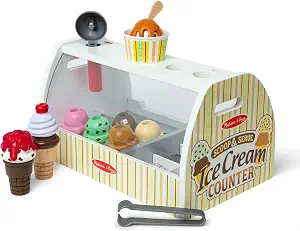
Best Overall is an editorial fit label for the option here that brings together a defined pretend-play setup, multiple serving pieces and a place to keep them. The wooden counter is part of a 28‑piece set that includes 8 scoops, 6 toppings, 2 cones, a cup, scooper, tongs, spoon, reusable menu card and 6 bills. That gives a child several concrete roles to try: choosing an item from the menu, assembling a pretend order, handling serving tools or exchanging play money. These are possible ways to use the listed pieces, not a promise about how a child will play. The age range is 36 months – 6 years, which gives shoppers a specific age reference to compare with the intended recipient.
The counter measures 13.43 x 7.72 x 8.7 inches, and its special ports hold all their treats. It also doubles as a toy storage box, making the counter itself part of the put-away plan. That combination may appeal when a household wants a more recognizable pretend-play station rather than loose pieces alone. The tradeoff is that this is a themed setup: shoppers looking primarily for a game with a defined player count or open-ended construction may prefer one of the other formats in this guide. Before Black Friday, check whether the exact listing includes the full 28‑piece set and the reusable menu card, rather than comparing an offer based only on the product title. Then consider whether the counter’s dimensions suit the intended play area and storage spot.
Magnetic Wooden Fishing Game Toy for Preschoolers (ASIN B08JLSR6RN)
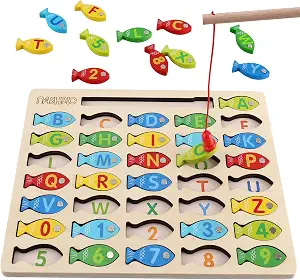
Best Budget is the supplied editorial label for this tabletop game; it is not a claim that it has the lowest current price. Its wooden fish pieces carry different letters and numbers, and the listed setup is for 1 player. Manual operation and tabletop play make the activity’s format easy to understand from the provided details: a child can use the game as a solo play invitation, choosing or handling fish pieces during an indoor session. A caregiver might suggest noticing a letter or number on a selected piece, but the listing facts do not establish particular learning outcomes or game rules. The item measures 11.8 x 8.9 x 0.6 inches, a useful set of dimensions to consider when deciding where tabletop play could happen.
This option is a different kind of purchase from a pretend counter or a building set. It focuses on a single activity and specifies one player, while the ice cream counter supplies props for role-play and the tiles invite construction. That focus can be helpful if the intended play moment is a simple individual tabletop activity; it may be less aligned with a shopper seeking a themed pretend scene or a collection of building pieces. The material is wood, and the stated indoor use is another practical filter for choosing where it belongs in a routine. During Black Friday, compare the exact game listing and its pictured or stated contents before deciding an offer is comparable. The provided details identify colorful fish with different letters and numbers, so confirm that the listing you select is for this version.
Key specs
Material
Material Type Wood
Dimensions
Item Dimensions 11.8 x 8.9 x 0.6 inches
Players
Number of Players 1
Play location
Play Activity Location Tabletop
Usage
Indoor Outdoor Usage Indoor
Operation
Operation Mode Manual
Game pieces
colorful fish pieces with different letters and numbers
PicassoTiles 100 Piece Magnetic Tiles, Clear 3D Building Blocks for Kids 3+
PicassoTiles 100 Piece Magnetic Tiles, Clear 3D Building Blocks for Kids 3+ (ASIN B00AU56C5W)
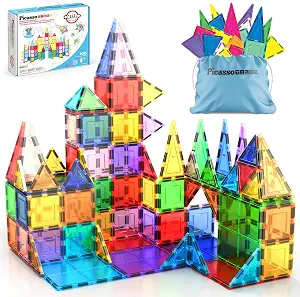
Best for open-ended building is the editorial label for this set because its listed format is magnetic tiles rather than a single pretend-play scene or tabletop game. It contains 100 pieces, is made of plastic and has a manufacturer recommended age of 3 years and up. Those are useful starting points for a shopper imagining a child who would rather arrange and rearrange building pieces than follow one themed activity. The included components are an instruction manual; the supplied facts do not specify other accessories or particular structures the set can make. Treat the number of pieces as a description of the set, not as a guarantee of how long play will last or what a child will build.
The listed item dimensions are 14 x 11.63 x 3.13 inches, and its item weight is 5.5 pounds. Use those exact listing details when considering where the set might be stored and whether its package suits your available space. Unlike the counter, it does not have a stated toy-storage function in the supplied facts, so plan your own place for keeping the pieces together rather than assuming one is included. For Black Friday, check that the specific offer is for the 100 Piece set and the intended listing, then compare the offer and package details with the other options on your shortlist. This choice may fit a household prioritizing flexible building invitations, while shoppers seeking a clear pretend scenario or a one-player tabletop game may prefer those distinct formats.
Key specs
Piece count
Number of Pieces 100
Recommended age
Manufacturer recommended age 3 years and up
Material
Material Type Plastic
Dimensions
Item Dimensions 14 x 11.63 x 3.13 inches
Weight
Item Weight 5.5 pounds
Included component
Included Components Instruction Manual
Compare the play sequence you want to invite
A useful first decision is what a child might do from the moment a toy comes out until it is put away. The counter supports a pretend-serving sequence: its menu card, scoops, toppings, cones, cup, utensils and bills offer recognizable props for creating a make-believe order. The fishing game has a more focused tabletop invitation, with wooden fish marked by different letters and numbers and a stated one-player format. The magnetic tiles suit a different starting point: choosing pieces and arranging them into a construction, with the manual listed as an included component. The product facts do not establish a prescribed play method for every child, so think of these as possible starting points rather than guaranteed outcomes.
Ask whether the intended recipient tends to gravitate toward role-play, an individual game or building. If you are buying for more than one child, do not assume that a one-player listing describes a group game; instead, consider whether its format matches the play situation you have in mind. Likewise, an open-ended building choice is not automatically a better fit than a themed counter. During Black Friday, let the preferred activity narrow the shortlist before comparing offers. This keeps a lower-looking offer from steering you toward a format that does not suit the child or the play moment you are trying to support.
Use age and material as practical filters
Age guidance is one concrete point of comparison among these choices. The counter is listed for 36 months – 6 years, while the magnetic tiles have a manufacturer recommended age of 3 years and up. No age range is included in the supplied details for the fishing game, so do not fill in that missing information by guessing. Check the exact listing for age guidance and use it alongside your own knowledge of the child and the intended use. A product’s stated age information can help you screen options, but it does not tell you by itself whether a particular child will enjoy the play format.
Material may also matter to your household preferences. The counter and fishing game are listed as wood; the magnetic tiles are listed as plastic. The facts do not provide additional material treatments, safety claims or maintenance directions, so avoid assuming details that are not stated. For Black Friday browsing, confirm that the age and material details shown belong to the exact item you are considering, rather than relying on a broad category description. Keep the comparison practical: decide what guidance you need to verify, what material you prefer, and whether the format still makes sense for the child. If a key detail is not supplied here, look for it in the product listing before purchasing.
Think about the play surface and what follows
The listed play settings distinguish the fishing game most clearly: it is described for tabletop play, indoor use and manual operation. That makes a table or another suitable flat surface a natural place to consider for this activity. The other facts give package or item dimensions, but do not specify a required play surface. For the counter, compare its 13.43 x 7.72 x 8.7 inches dimensions with the space where you expect it to sit. For the tiles, consider both their listed package dimensions and where you would keep the pieces when play ends. These are planning prompts, not claims that a product needs a particular room or furniture arrangement.
Storage deserves its own decision. The counter is specifically described as doubling as a toy storage box, and its countertop ports hold all their treats. The supplied details do not state a storage feature for the other options; that is not proof that no storage arrangement exists, so check the relevant listing if it matters. Think through the whole routine: where the toy begins, where a child can use it, and how its components might be gathered afterward. In Black Friday comparisons, account for this everyday fit alongside the offer. A set that suits the play area and put-away plan may be more useful to your household than one chosen only because the listing looks appealing.
Read the Black Friday listing as a set description
A Black Friday offer should be compared by exact product and stated contents, not by a headline alone. The counter’s 28‑piece description is unusually specific, naming the serving props, reusable menu card and bills. The fishing game’s supplied description identifies colorful wooden fish with different letters and numbers, as well as its one-player, tabletop format. The tile set is identified as 100 pieces and includes an instruction manual. These details give you a practical checklist for checking whether the page you are viewing describes the same version as the one in this guide.
Do not infer that two offers are equivalent just because their titles share a product type or brand name. Confirm the set description, the relevant age guidance and the dimensions where available. If the offer page leaves out a detail that affects your choice, inspect the listing rather than assuming it matches another version. The information here does not establish sale prices, discounts or stock, so use the current listing to evaluate the actual offer. A careful comparison is especially useful when choosing between different kinds of preschool toy: a counter, a fishing game and magnetic tiles are not interchangeable just because each could be considered for a preschooler.
Build a Black Friday shortlist around household fit
Once the play style, age information and space are clear, shortlist only the options that meet your priorities. A pretend-serving setup may be the strongest match if the child is drawn to menus, serving tools and make-believe orders. The fishing game may suit a planned solo tabletop activity, particularly if its letter-and-number pieces are appealing to your household. The tiles may be a good candidate when the goal is to offer building pieces rather than a fixed scene. These are fit-based distinctions, not claims that one option is universally superior. Consider the practical tradeoff as well: a more defined play theme offers a clear scenario, while a building set leaves the child to decide what to arrange.
For a Black Friday purchase, write down the exact features that matter before opening multiple offers. You might prioritize a stated age range, wood or plastic material, the counter’s storage function, the fishing game’s one-player format, or the tile set’s piece count. Then check the offer’s actual product identity and included details against that list. Avoid treating a deal label as evidence of a better set or a better fit. Your final comparison should answer: Is this the specific item I intended to choose, does its described format suit the child, and can I accommodate the listed item or package dimensions? If not, move to another option rather than stretching the decision to fit an offer.
Make your Black Friday choice
The strongest choice depends on the play sequence you want to bring home: pretend serving with a counter and its named accessories, a solo tabletop fishing activity with lettered and numbered fish, or open-ended building with magnetic tiles. Before completing a Black Friday purchase, check the exact listing and variant, confirm the stated set contents and age guidance where provided, review material and dimensions, and consider the play and storage space available. For the counter, verify its full 28‑piece description; for the fishing game, check the one-player tabletop details; for the tiles, confirm the 100-piece set. Those simple checks keep the decision focused on fit rather than an offer headline.