EF ECOFLOW Solar Generator Delta 3 Classic with 220W Solar Panel, 1024Wh (ASIN B0FRMQPZF6)
Best Solar Generator Buying Guide — Black Friday Deals 2026
What do you need a solar generator to do first: keep a few personal devices going, provide a larger battery reserve, or support equipment that calls for more AC output? That practical question is a better starting point than a Black Friday headline. These three bundles pair different power stations with solar panels, so compare the exact model, capacity, output, ports and included panel before deciding. The Jackery 300 is the compact-capacity choice in this group; the Jackery 1000 v2 and EF ECOFLOW Delta 3 Classic offer 1024Wh capacities, with different output figures and solar-panel bundles. Black Friday can make listings especially worth checking carefully, but a deal label alone does not establish value. Match the configuration to your intended tasks, then verify that the exact offer contains the features you want.
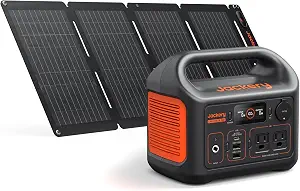
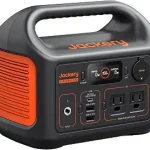
Jackery Solar Generator 300 and 40W Solar Panel (ASIN B0G429L5B4)
Best Budget is the editorial fit for the Jackery Solar Generator 300 and 40W Solar Panel because its listed capacity is 292Wh and its AC output is 300W. Those figures make it a useful candidate to consider when your plan centers on a modest set of devices rather than a larger reserve. The package name identifies a 40W solar panel, so look at the generator and panel together when comparing it with other Black Friday bundles. A smaller-capacity choice may suit a narrower task list, while a shopper planning for more stored energy should compare the other models here before settling on it.
Think through the order in which you expect to use the available connections. The unit has two AC outlets, a 100W USB-C PD port, two USB-A ports, and a 120W car port. That mix gives you several connection types to compare against the plugs and charging leads involved in your plans. Before Black Friday checkout, write down which devices you would connect, which port each would use, and whether the AC output figure suits the equipment’s stated needs. The number of ports alone does not tell you whether a particular set of devices can run together; compare their requirements with the listed outputs instead.
The product specifies 300W rated output and 600W peak surge, alongside LiFePO4 battery chemistry. Keep continuous output and peak surge distinct while considering equipment with an initial power demand. The peak figure is not a reason to treat the unit as though it supplies that level continuously. Likewise, the chemistry is a useful specification to weigh, not a complete description of how the generator will fit your routine. Decide what you need to power, how long you need energy available, and whether the stated capacity and outputs fit those intended tasks.
For a Black Friday comparison, check that the listing you are considering is this Jackery 300 bundle and that its 40W panel is part of the exact configuration. Compare the bundle contents and port list with your own checklist rather than assuming another listing with a similar name includes the same items. If your priority is a compact set of connections and a 292Wh capacity, this model merits a place on your shortlist. If your expected equipment needs more AC output or a larger battery capacity, use those needs to compare it with the higher-capacity options. Best Budget expresses a buyer-fit choice among these featured products, not a claim that it is the least expensive offer.
Key specs
Capacity and AC output
292Wh,300W AC
Ports
2 AC outlets, a 100W USB-C PD port, 2 USB-A ports, and a 120W car port.
Rated and peak output
300W rated output (600W peak surge)
Battery chemistry
LiFePO4 chemistry
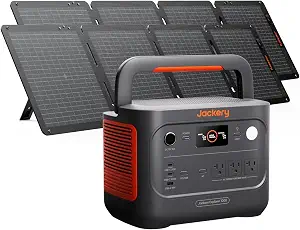
Jackery Solar Generator 1000 v2 and 2x100W Solar Panel,1024Wh LiFePO4
Jackery Solar Generator 1000 v2 and 2x100W Solar Panel,1024Wh LiFePO4 (ASIN B0D66VD3X4)
Best Overall is the editorial choice for the Jackery Solar Generator 1000 v2 and two 100W Solar Panels because the listed combination brings a 1024Wh capacity together with 1,500W AC output. Its 3,000W surge peak is a separate figure to consider for equipment that has a starting demand; it should not be confused with the AC output. This pairing of capacity and output makes the model a flexible candidate to evaluate across a varied task list, but the right choice still depends on your devices and intended use. The label identifies its place among these options rather than establishing a measured advantage over every solar generator.
The bundle includes two 100W solar panels, an important part of the Black Friday offer to verify. Compare the precise product configuration, not just a promotional title or a picture: check that the listing names the 1000 v2 and includes both panels. Panel contents can change what a bundle means to you, so put them beside the generator specifications when comparing offers. The available facts identify the panels but do not establish how quickly a particular setup will recharge in your conditions. Treat recharging expectations as a separate question to investigate for your own situation rather than assuming a guaranteed result from the panel labels.
A listed 10ms UPS switchover gives shoppers with a backup-related task another specification to assess. Consider whether that transfer detail matters for the equipment you intend to connect, and check the equipment’s own requirements rather than treating a UPS figure as a universal guarantee for every use. At 23.37 Lbs, the stated weight is also worth keeping in view when deciding where the generator will be placed or when moving it is part of your plan. Those details serve different purposes: one concerns a stated transfer time, and the other informs your handling considerations.
For Black Friday, begin with the exact listing and then compare the specs that matter to your intended sequence of tasks: stored energy, AC output, surge peak, backup behavior, weight and panel contents. This Jackery has a LiFePO4 capacity of 1024Wh, 1,500W AC output, and a 3,000W surge peak; the supplied facts also specify the 10ms UPS switchover, 23.37 Lbs weight, and two 100W panels. None of those details removes the need to check your devices’ power needs. Best Overall is a practical editorial recommendation within this group for someone seeking a balance of substantial capacity, AC output and a defined panel bundle, not proof of a universal winner.
Key specs
Capacity
1024Wh
AC output
1,500W AC output
Surge output
3,000W surge peak
UPS switchover
10ms UPS switchover
Weight
23.37 Lbs
Included solar panels
2 * 100W Solar Panels
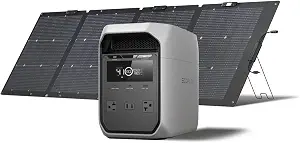
EF ECOFLOW Solar Generator Delta 3 Classic with 220W Solar Panel, 1024Wh
EF ECOFLOW Solar Generator Delta 3 Classic with 220W Solar Panel, 1024Wh (ASIN B0FRMQPZF6)
Best for Higher AC Output is the editorial label for the EF ECOFLOW Solar Generator Delta 3 Classic with 220W Solar Panel. Its listed output is 1800W, with a 3600W surge, while the product name specifies a 1024Wh capacity. This combination deserves attention if your intended equipment makes AC output a leading part of the decision. Compare the surge figure separately with the equipment’s starting requirements; it is not the same as the stated output. The label describes why this model stands out among the three featured choices, not a measured claim about performance or a guarantee that it suits every load.
The package includes a 220W bifacial solar panel, and the product listing states recharge in just 5.8 hours with a 220W solar panel. Keep that stated claim attached to its stated panel context when comparing Black Friday bundles. It is not a promise that every location, setup or situation will produce the same recharge experience. For a practical comparison, verify that the exact offer is the Delta 3 Classic configuration with the panel you expect, then consider whether the stated recharge information addresses your own plan. Do not substitute a similarly named configuration without checking its included contents.
The unit has a 100W USB-C output and a LiFePO4 battery. The USB-C specification may matter if that port is part of your planned device connections; compare its stated output with what the connected equipment calls for. The battery chemistry is another fact to weigh alongside capacity, panel contents and output, rather than a substitute for checking those details. The listed capacity is 1024Wh, so shoppers can compare it directly with the other 1024Wh model here while still distinguishing their AC output figures and solar bundles.
For backup planning, the provided specification says the generator automatically switches to battery in under 10ms. Treat that as a stated transfer detail to compare with the needs of the specific equipment you have in mind, not as a blanket assurance for every use. During Black Friday offer checks, read the model name, panel specification, capacity and outputs together. If higher listed AC output is central to your shortlist, the 1800W figure and 3600W surge make this ECOFLOW a natural candidate to evaluate. Best for Higher AC Output identifies that feature-based fit among these options; your final selection should still follow your intended tasks and the exact listing configuration.
Key specs
Output
1800W output (3600W surge)
USB-C output
100W USB-C Output
Battery
LiFePO4 Battery
UPS transfer
automatically switches to battery in under 10ms
Solar recharging
Recharge in just 5.8 hours with a 220W solar panel.
Solar panel
220W bifacial solar panel
Map the day’s tasks to stored energy
Start with a short sequence of intended tasks instead of choosing by a headline capacity alone. Name the devices you want to connect, note whether each uses AC or a USB connection, and decide which tasks are essential. Then compare that plan with the listed capacity: the Jackery 300 provides 292Wh, while both the Jackery 1000 v2 and the ECOFLOW Delta 3 Classic are listed at 1024Wh. That distinction can help narrow your options, but capacity by itself does not establish how long a particular device will run. The actual device requirements and your planned use matter, so avoid turning a capacity figure into an unsupported runtime estimate.
Next, separate stored energy from output. A generator can have a capacity that looks suitable on paper while its output figures still need checking against the equipment you plan to use. Record the AC output and surge peak independently, and compare them with the equipment’s stated needs. If you will use several connection types, include those in the plan too. This task-first method is especially helpful during Black Friday, when bundles and promotional labels can draw attention away from the configuration details. A shortlist should explain why each model fits your planned sequence, not merely repeat its biggest number.
Use Black Friday offer checks to compare like with like
A Black Friday offer is only comparable when you know exactly which configuration it describes. Confirm the complete product name and check whether a solar panel is included, along with the panel specification. Here, the Jackery 300 bundle names a 40W panel; the Jackery 1000 v2 bundle specifies two 100W panels; and the ECOFLOW package identifies a 220W bifacial panel. Keep those details beside the generator’s capacity and outputs so a bundle with a different set of contents does not look interchangeable by accident.
Then examine the exact listing you are considering rather than relying on a broad product-family name. Check that the model and included items match the offer you intended to evaluate. A deal label does not establish that a configuration is the right fit, and no active promotion or savings amount can be assumed from these product details. Compare the offer against your own checklist: needed connections, output, capacity, panel contents and any backup behavior you care about. If one of those points is unclear, pause before deciding rather than filling the gap with an assumption. This approach makes Black Friday browsing more deliberate without treating the event itself as evidence of value.
Read output figures as limits for different jobs
AC output and surge peak describe different considerations, so keep them in separate parts of your comparison. The Jackery 300 lists 300W AC output and a 600W peak surge. The 1000 v2 lists 1,500W AC output and a 3,000W surge peak, while the Delta 3 Classic lists 1800W output and a 3600W surge. Do not treat a surge value as though it were the regular output figure. If a device has a starting demand, consult its specifications and compare that need with the relevant generator figures.
Ports deserve their own check. The Jackery 300 specifies two AC outlets, a 100W USB-C PD port, two USB-A ports and a 120W car port. The ECOFLOW facts specify a 100W USB-C output. Do not infer an unlisted port configuration for either 1024Wh model; use the exact listing to verify connections when they matter to your plan. During Black Friday, a larger output figure can be attention-grabbing, but the useful choice is the one whose outputs and connections fit the devices you intend to use. A written device-to-port list can make that distinction much clearer.
Decide whether backup transfer belongs on your shortlist
Backup behavior matters only if it is relevant to the equipment and routine you have in mind. The Jackery 1000 v2 specifies a 10ms UPS switchover, and the ECOFLOW Delta 3 Classic states that it automatically switches to battery in under 10ms. Those are useful details to compare when evaluating a backup-related task, but they should not be stretched into a guarantee for every device or setup. Check what the equipment itself requires and whether the listed transfer detail addresses that need.
If backup transfer is not part of your plan, give more attention to the specifications that are. Capacity, AC output, surge, ports and panel contents may matter more to a camping, travel or household-device checklist. These are possible planning contexts, not claims about a product’s performance in any particular environment. Black Friday comparisons can encourage shoppers to treat every feature as equally important; instead, rank your actual priorities. A generator that fits the job you have selected is a more useful decision than one chosen for a specification you do not expect to use.
Make panel and handling details part of the plan
The included panel is part of the bundle, not a decorative extra in its title. Compare the Jackery 300’s named 40W panel, the two 100W panels in the Jackery 1000 v2 package, and the ECOFLOW’s 220W bifacial panel. The ECOFLOW listing also states recharge in just 5.8 hours with a 220W solar panel. Keep that claim tied to the stated configuration and avoid assuming the same result in every situation. The other supplied panel details identify what is included, but do not provide a recharge-time figure for those bundles.
Handling can also influence your choice. The Jackery 1000 v2 is listed at 23.37 Lbs, a concrete detail to consider if moving or positioning the unit is part of your routine. The provided records do not give weights for the other models, so compare those details on the exact listing if they matter to you rather than guessing. Before a Black Friday purchase, check that the panel configuration, generator model and any specifications you rely on all belong to the offer under consideration. A final review of those particulars helps turn a broad shortlist into a decision grounded in the bundle you will actually select.
Make your Black Friday choice
Before choosing, make a final checklist from your intended tasks: the devices and ports involved, the capacity you want to consider, the AC output and surge needs, any backup-transfer requirement, panel contents and handling details. Then verify each item against the exact Black Friday listing and configuration. The Jackery 300 pairs 292Wh with a 40W panel; the Jackery 1000 v2 pairs 1024Wh with two 100W panels; and the ECOFLOW Delta 3 Classic pairs a 1024Wh capacity with a 220W bifacial panel. Those distinctions offer a clear starting point, not a substitute for matching specifications to your equipment. Choose the bundle whose verified details line up with your plan, and disregard a promotion label if the configuration does not.