Best Handheld Pc Buying Guide — Black Friday Deals 2026
Which handheld PC fits the way you actually plan to use it: one with a larger OLED display, one with two listed USB Type-C ports, or one whose processor name is central to your shortlist? That is a useful question to answer before Black Friday listings start competing for attention. The Lenovo Legion Go 2, ASUS ROG Xbox Ally, and MSI Claw A8 offer different combinations of screen, memory, storage, and connectivity. This guide treats each as a configuration to consider, not a promise of performance or a claim about a current promotion. Start with the features you care about, then verify the exact model and terms shown on the listing.
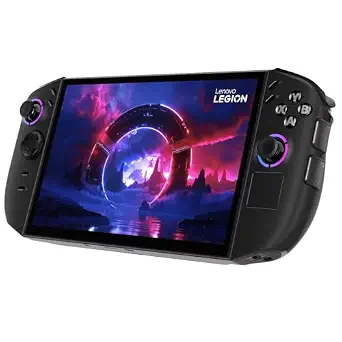
Lenovo Legion Go 2 Gaming Handheld Gaming PC (ASIN B0G5VHZ1TC)
The Lenovo Legion Go 2 is the Best Overall pick in this guide because its listed configuration brings together a 32GB RAM specification, 1TB NVMe SSD, and an 8.8 WUXGA OLED 144Hz display. That combination gives shoppers several concrete points to weigh in one device, rather than requiring the choice to rest on a single headline feature. Its processor is AMD Ryzen Z2 8C, and the listing identifies Windows 11 Home as the operating system. If your comparison notes include memory, storage, screen type, and refresh rate, this model provides a detailed set of listed specifications to check against your priorities.
Think about how much attention you want to give the display when you compare handheld PCs. The Lenovo listing describes an 8.8 WUXGA OLED 144Hz screen, which may make this a natural candidate if those exact display details matter to you. The product also lists a 74Whr battery and Wi-Fi 6E. Treat both as specifications to compare with your own needs, not as guarantees of a particular runtime or connection experience; those outcomes are not established by the details here. Before choosing, confirm that the listing still shows the configuration you intend to buy, including the screen and battery details.
For a Black Friday decision, the Lenovo is best approached as a well-specified option rather than an automatic winner. Its 1TB NVMe SSD and 32GB RAM are useful comparison anchors if those capacities are prominent in your notes, while AMD Ryzen Z2 8C gives processor-focused shoppers a named component to investigate. The provided specifications do not establish how it performs against the other devices, so avoid treating a longer feature list as proof of measured superiority. Decide whether its display, memory, storage, battery, wireless, and operating-system details justify the exact offer you see. If some of those features are not priorities for you, another configuration may be a better personal fit.
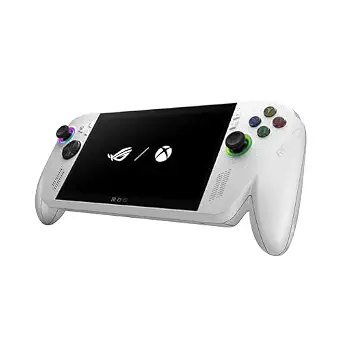
The ASUS ROG Xbox Ally earns the Best for dual USB-C connectivity label because its listed connections include dual USB Type-C ports. That is a specific point of distinction for shoppers whose setup decisions depend on having two Type-C connections available. The label is an editorial fit, not a claim that every accessory or arrangement will work as intended; check the exact listing and the requirements of the devices you plan to connect. The rest of the listed configuration includes an AMD Ryzen Z2 A processor, 16GB of LPDDR5 6400MHz RAM, and a 512GB SSD.
Its display is described as a 7” 1080p 120Hz Touchscreen, and the operating system is Windows 11. Those details give you several ways to compare it with the other products: screen size and description, touch capability, memory type and amount, storage capacity, and operating system. Consider which of those affect your own decisions rather than assuming that one specification settles the choice. If you expect to use the touch display as part of your routine, confirm the exact screen description on the listing. If your main concern is storage or memory, place the listed capacities alongside the other configurations before deciding.
During Black Friday shopping, the ASUS model may suit a buyer who has already identified dual USB Type-C ports as an important requirement. Keep that priority separate from questions about screen preference or processor choice, since the available facts do not establish how the device performs in any particular game or application. Compare the precise listing variant and offer terms, then ask whether its 16GB of LPDDR5 6400MHz RAM and 512GB SSD match the amounts you want. Its Windows 11 operating system is another detail to verify if that matters to your selection. The port-focused label helps organize a shortlist; it does not replace checking the full configuration.
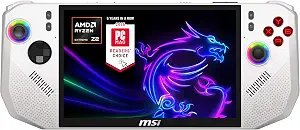
The MSI Claw A8 is the Best for processor-focused comparison choice because its listing names an AMD Ryzen Z2 Extreme processor. That label gives shoppers who want to put the processor prominently in their comparison a clear starting point, without implying tested or measured superiority. The rest of its listed configuration matters too: 24GB LPDDR5x memory, a 1TB NVMe SSD, and an 8” FHD+ 120Hz display. Looking at those details together helps keep a processor-led shortlist grounded in the complete configuration rather than the processor name alone.
The display description and card reader may also shape whether this model belongs on your list. The listing specifies an 8” FHD+ 120Hz Display and an SD Card Reader. If those are details you care about, confirm that they appear on the exact product page and consider how they fit your intended setup. The operating system is Win 11 Home. Avoid assuming that the card reader supports a particular workflow or that the display will suit every preference; the provided facts identify the features but do not describe outcomes or compatibility beyond their names.
For Black Friday, compare the MSI’s processor designation with its memory and storage before deciding that the offer is compelling. Its 24GB LPDDR5x and 1TB NVMe SSD provide specific figures for your notes, while the display, card reader, and Win 11 Home round out the listed configuration. The information here does not say how the MSI performs relative to the Lenovo or ASUS, so treat processor interest as one decision factor rather than a verdict. Confirm the exact model, included specification details, and offer terms on the listing. This is a focused choice for readers who want to investigate the named processor while still evaluating the rest of the device.
Key specs
Processor
AMD Ryzen Z2 Extreme
Display
8″ FHD+ 120Hz Display
Memory
24GB LPDDR5x
Storage
1TB NVMe SSD
Card reader
SD Card Reader
Operating system
Win 11 Home
Write down the moments that matter to you
Before comparing Black Friday offers, picture the situations in which you would reach for a handheld PC. You might care most about reading a display comfortably, having a particular operating system, or finding a configuration with a named amount of memory and storage. These are personal priorities, not proof that one product will suit every setting. Writing them down gives you a way to judge the Lenovo Legion Go 2, ASUS ROG Xbox Ally, and MSI Claw A8 without being pulled from one headline specification to another.
Turn each priority into a question that the product details can answer. Does the listed screen description match what you prefer? Is the operating system shown as the one you are looking for? Do the stated memory and storage capacities fit your expectations? If you have connection requirements, does the listing actually name the ports you need? The ASUS is the one here with dual USB Type-C ports listed; the MSI lists an SD Card Reader. Those statements help you narrow the comparison, but should not be stretched into assumptions about compatibility or an unlisted feature.
Keep a short record of what matters and what remains uncertain. A Black Friday headline is not a substitute for the product configuration, and a specification alone cannot answer every question about your personal use. Mark features that are essential, preferences that would be welcome, and details you still need to verify on the exact listing. This simple separation can prevent a tempting offer from becoming your decision before you know whether its stated configuration suits your plans.
Let screen descriptions guide the shortlist
These three products offer different display descriptions, so consider what you want from a screen before comparing the rest of the specifications. The Lenovo listing gives an 8.8 WUXGA OLED 144Hz display. ASUS lists a 7” 1080p 120Hz Touchscreen, while MSI specifies an 8” FHD+ 120Hz Display. Those descriptions give you concrete distinctions to review, but they do not establish which screen you will prefer. Think about the qualities you value, then verify the wording on the exact listing rather than relying on a shortened title.
A Black Friday screen comparison can become confusing when one listing emphasizes a display attribute and another emphasizes a different one. Keep the source descriptions intact in your notes: display type and refresh rate for Lenovo, resolution, touchscreen, and refresh rate for ASUS, and the FHD+ description and refresh rate for MSI. Do not assume that matching one number means two screens are otherwise equivalent. If a particular screen feature is a deciding factor, make it a requirement you confirm rather than a detail you infer.
Also weigh the screen alongside the rest of the configuration. A preferred display may not settle questions about memory, storage, operating system, or connectivity. Conversely, a screen description that is not your top priority may still be acceptable if other listed details better match your checklist. Decide what is essential before browsing offers, and keep preferences distinct from requirements. That makes it easier to compare the complete device instead of letting one Black Friday listing phrase dominate your attention.
Compare the components without guessing at results
Processor names, memory, and storage are useful comparison points, but the supplied specifications do not describe measured performance. Lenovo lists AMD Ryzen Z2 8C, 32GB RAM, and a 1TB NVMe SSD. ASUS lists AMD Ryzen Z2 A, 16GB of LPDDR5 6400MHz RAM, and a 512GB SSD. MSI lists AMD Ryzen Z2 Extreme, 24GB LPDDR5x, and a 1TB NVMe SSD. You can compare those exact details to your priorities without turning them into unsupported claims about speed or results.
Ask yourself which component deserves the most weight in your own decision. If processor naming is your main research starting point, the MSI’s named AMD Ryzen Z2 Extreme may merit a closer look, while the Lenovo and ASUS list different processor names. If memory or storage capacity matters more, put the stated amounts side by side and consider what you expect to need. Do not assume that a larger listed amount automatically makes a product the right choice; your intended use and other requirements still matter.
During Black Friday, record the specification beside the exact offer you are considering. Listings can be easy to confuse when several configurations share a product family or similar names. Verify that the processor, memory, and storage shown correspond to the device in your cart. If the listing does not make a detail clear, treat it as unresolved instead of filling the gap with an assumption. A careful comparison is more useful than a confident-sounding conclusion unsupported by the facts.
Check the operating system and connections you value
Operating system and connection details can be decisive when they match a specific requirement. Lenovo lists Windows 11 Home, ASUS lists Windows 11, and MSI lists Win 11 Home. Preserve those descriptions as written while comparing, and confirm the exact version shown on the listing if the distinction matters to you. The available information does not establish additional software, setup details, or compatibility, so do not assume those from the operating-system name alone.
The connection facts are more specific for two of the devices: ASUS lists dual USB Type-C ports, and MSI lists an SD Card Reader. Lenovo’s provided facts identify Wi-Fi 6E, but do not list a port detail here. This is not evidence that an unmentioned feature is absent; it only means that the supplied information does not confirm it. If your setup depends on a particular connection, make the required feature explicit and verify it in the exact product listing before buying.
A useful Black Friday check is to write down the connection you need, then look for that exact wording in the configuration details. Avoid treating a product name or a broad category label as confirmation of a specific port, card reader, or wireless specification. If you are comparing accessories or other devices, verify their requirements separately; the product facts here do not establish compatibility. This approach keeps a practical setup question from being decided by guesswork.
Read the offer as carefully as the device
A Black Friday label tells you that an offer is being presented, not whether it is the right configuration or a worthwhile purchase for you. No current price, discount, stock status, or promotion is established here. Compare the exact listing and its terms at the time you shop, and make sure the product variant corresponds to the specifications you used to build your shortlist. If the offer page leaves an important detail unclear, pause to verify it instead of assuming that every version shares the same configuration.
Use a compact comparison note with four columns: model, must-have features, unresolved questions, and offer details to confirm. For example, list the Lenovo’s display and battery specifications if those are priorities; note the ASUS’s dual USB Type-C ports if your decision depends on them; and include the MSI processor name if you want to investigate that component. Keep each note tied to a stated fact, and avoid writing conclusions about performance that the listed specifications cannot support.
Before placing an order, revisit your priorities and compare the final offer with them. Confirm the displayed model name, the configuration details that matter, and the terms presented on the product page. The best Black Friday choice is not necessarily the offer with the most prominent headline; it is the exact listing that satisfies your requirements at terms you are comfortable with. If none of the listings answers an essential question, keep researching rather than treating uncertainty as confirmation.
Make your Black Friday choice
Make the final choice by matching an exact listing to your own checklist: preferred screen details, processor interest, memory and storage needs, operating system, and any connection requirement. The Lenovo Legion Go 2 is the Best Overall editorial pick here; ASUS is the Best for dual USB-C connectivity, and MSI is the Best for processor-focused comparison. Those labels organize this selection, not measured rankings. For Black Friday, verify the precise model, listed specifications, and offer terms before deciding. Choose the configuration that answers your important questions, and leave any unconfirmed detail out of your assumptions.