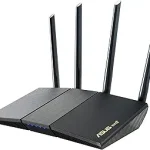
TP-Link AC1200 WiFi Router Dual Band Wireless Internet Router (Archer A54)
TP-Link AX1800 WiFi 6 Router (Archer AX21 V5)
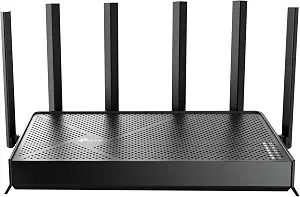
TP-Link BE6500 Dual-Band WiFi 7 Router (BE400)
Best Router Buying Guide — Black Friday Deals 2026
A router shortlist makes sense only when it fits the internet connection, devices and rooms you need to serve. These three TP-Link models span dual-band Wi-Fi 5, Wi-Fi 6 and Wi-Fi 7, with different speed figures, port layouts and coverage details. Black Friday can be a useful moment to compare them, but a promotion is valuable only if the exact model suits your setup. Start with the way you use your network: wireless devices, wired equipment, room layout and plans for adding mesh coverage all point to different priorities. The guide below explains what each router’s stated features can help you weigh, without treating headline figures as a promise of results in every home.
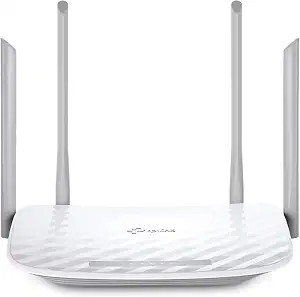
TP-Link AC1200 WiFi Router Dual Band Wireless Internet Router (Archer A54)
Check Price on Amazon
Best Budget is the editorial label for the Archer A54, a dual-band AC1200 router with stated speeds of up to 867 Mbps on 5 GHz and up to 300 Mbps on 2.4 GHz. Those band-specific figures help make the model’s wireless profile easy to compare with your needs and the devices you plan to connect. The listing gives coverage of up to 1,000 sq. ft. with four external antennas. Treat that as a planning detail rather than a promise that the signal will reach every corner: rooms, router placement and the layout of your home still matter when choosing a location.
The wired details deserve attention alongside the wireless figures. The Archer A54 has four 10/100 Mbps Fast Ethernet ports. If you intend to connect equipment by cable, check the port description against the connection needs of each device before buying. The router also supports AP Mode, which can transform a wired connection into a wireless network. That gives shoppers considering an access point role a specific feature to evaluate, rather than a general assumption about how the router might fit into another network. IPTV support is listed too, including IGMP Proxy/Snooping, Bridge and Tag VLAN to optimize IPTV streaming.
The TP-Link Tether app is described as a way to manage the network, which may suit shoppers who prefer app-based control. The listing also says that a separate modem is required. Factor that into your Black Friday comparison if you are assembling a complete connection, since the router itself is not presented as the modem. The Best Budget label reflects an editorial choice among the featured routers, not a claim about price, discount or measured value. Check the exact Archer A54 listing and variant, then consider whether its stated coverage, port type, AP Mode and IPTV features match the job you want it to do.
Key specs
| Wi-Fi speeds | 5 GHz speeds up to 867 Mbps and 2.4 GHz speeds up to 300 Mbps |
| Coverage | Covers up to 1,000 sq. ft. with four external antennas |
| Ethernet ports | 4 x 10/100 Mbps Fast Ethernet Ports |
| Access point mode | Supports AP Mode to transform your wired connection into wireless network |
| IPTV support | Supports IGMP Proxy/Snooping, Bridge and Tag VLAN to optimize IPTV streaming |
| Network management | Easy network management at your fingertips with the TP-Link Tether app. |
| Modem requirement | All Wi-Fi routers require a separate modem. |
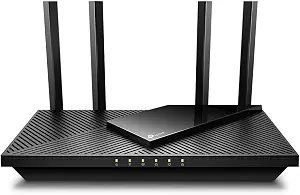
TP-Link AX1800 WiFi 6 Router (Archer AX21 V5)
Best Overall is an editorial pick for the Archer AX21 V5 because its stated combination of Wi-Fi 6, dual-band bandwidth and OFDMA gives shoppers several useful decision points in one router. Its supported standards include 802.11ax alongside 802.11ac, 802.11b, 802.11g and 802.11n. That range is relevant when you are checking the standards named for devices already in your home as well as newer ones. The router lists 1.8 Gbps total bandwidth, with up to 1200 Mbps on 5 GHz and up to 574 Mbps on 2.4 GHz. Those are product specifications, not a guarantee of the speed any one device will receive.
The listing also identifies OFDMA for device connectivity and four antennas. Those details may help frame a household’s needs if several kinds of devices share the network, but they do not tell you how a specific floor plan or internet service will perform. Consider which devices use Wi-Fi, where they are used and whether their supported standards match the router’s listed standards. The AX21 V5 is also described as supporting Open VPN Server and PPTP VPN Server. That can be a relevant distinction for shoppers who are specifically looking for router-based VPN server support; it is not a reason to assume that every VPN setup or service is supported.
Its Best Overall label is a practical editorial choice among these three listings, not the result of comparative testing or a market-wide award. For Black Friday, check that the offer you are considering is for the Archer AX21 V5 and review the product details shown with that exact listing. The dimensions are 10.28″L x 5.3″W x 1.61″H, which may help when you are deciding where the router can sit. If your main priority is Wi-Fi 7, multi-gigabit wired ports or a stated coverage figure, compare those needs with the other featured models rather than assuming this label means it is best for every home.
Key specs
| Wi-Fi standards | 802.11ac, 802.11ax, 802.11b, 802.11g, 802.11n |
| Dual-band bandwidth | 1.8 Gbps total bandwidth (up to 1200 Mbps on 5 GHz and up to 574 Mbps on 2.4 GHz) |
| Device connectivity | using revolutionary OFDMA technology |
| Antenna count | 4 |
| VPN server support | Supports both Open VPN Server and PPTP VPN Server |
| Dimensions | 10.28″L x 5.3″W x 1.61″H |
TP-Link BE6500 Dual-Band WiFi 7 Router (BE400)
Check Price on Amazon
Best for Wi-Fi 7 and Multi-Gigabit Ports is the editorial label for the Archer BE400. Its stated wireless speeds are up to 5764 Mbps on 5 GHz and up to 688 Mbps on 2.4 GHz. The router is identified as Wi-Fi 7, and these band-specific figures give shoppers concrete details to compare with the devices and connection they expect to use. They should not be read as guaranteed speeds for every device or room. The listing gives maximum coverage of up to 2,400 sq. ft. for up to 90 devices at a time; use those qualifications when considering whether the stated coverage and device capacity align with your household.
The port layout is a central reason to consider this model if wired connections are part of your plan. It has one 2.5 Gbps WAN/LAN port, one 2.5 Gbps LAN port and three 1 Gbps LAN ports. Compare those labels with the equipment you actually expect to connect, and note which port you intend to use for the incoming connection. The router can also expand into a seamless mesh network by connecting to an EasyMesh-compatible router or range extender. The listing specifically says it is not compatible with mesh WiFi systems like Deco, so check compatibility with the exact device you plan to pair.
The BE400 can be set up and managed with the free Tether App, and the listing says a separate modem is required. Keep both details in view when reviewing a Black Friday offer: the app concerns management, while the modem requirement affects the rest of the connection setup. This model’s Best for Wi-Fi 7 and Multi-Gigabit Ports label identifies the features behind its place in this guide; it does not establish measured superiority. Before checkout, confirm the exact BE400 listing and weigh its port arrangement, stated coverage, app management and specific EasyMesh compatibility against your own setup.
Key specs
| Wireless speeds | speeds up to 5764 Mbps (5 GHz) and 688 Mbps (2.4 GHz). |
| Coverage | up to 2,400 sq. ft. max coverage for up to 90 devices at a time. |
| Ethernet ports | 1x 2.5 Gbps WAN/LAN port, 1x 2.5 Gbps LAN port and 3x 1 Gbps LAN ports |
| Mesh compatibility | Expand your network into a seamless mesh network by connecting the Archer BE400 to any EasyMesh-compatible router or range extender. Not compatible with mesh WiFi systems like Deco. |
| Setup requirement | All Wi-Fi routers require a separate modem. |
| Control | Quickly set up and manage your Archer BE400 with the free Tether App. |
Let your devices set the wireless priority
Begin with the devices you expect to connect, not the largest speed figure on a product page. The Archer A54 lists 5 GHz speeds up to 867 Mbps and 2.4 GHz speeds up to 300 Mbps. The Archer AX21 V5 lists up to 1200 Mbps on 5 GHz and up to 574 Mbps on 2.4 GHz, as well as 802.11ax among its supported standards. The Archer BE400 is identified as Wi-Fi 7 and lists up to 5764 Mbps on 5 GHz and up to 688 Mbps on 2.4 GHz. These are different product specifications; they do not predict a particular result for every device or internet connection.
Check the wireless standards supported by the equipment you use most. The AX21 V5’s listed standards include 802.11ac, 802.11ax, 802.11b, 802.11g and 802.11n, which gives a shopper specific compatibility details to compare against device documentation. If your priority is a router identified as Wi-Fi 7, the BE400 is the relevant option in this group. If you are comparing Black Friday listings, make sure you are looking at the same model and band-specific figures rather than relying on a broad AC, AX or BE label alone.
OFDMA is another distinction to consider: the AX21 V5 listing names it in connection with device connectivity. Think about whether that stated feature matters to the way your household shares a network, but do not treat it as proof of a particular speed or performance outcome. A useful shortlist matches actual devices and priorities to the named standards and features. That approach can make Black Friday comparisons clearer without assuming that a higher headline figure automatically fits your needs.
Sketch where wireless service needs to reach
Coverage figures can help you compare products, but they are only one part of planning a router’s place in your home. The Archer A54 lists coverage of up to 1,000 sq. ft. with four external antennas. The Archer BE400 lists maximum coverage of up to 2,400 sq. ft. for up to 90 devices at a time. Those figures include qualifications, and neither one describes the exact result in every room. Consider where the router can be placed and which rooms need a connection before deciding how much weight to give a listed coverage area.
Draw a simple picture of the spaces where you use connected devices. Note places where you work, stream or use a phone, and identify areas separated from the likely router location. This is a planning exercise, not a way to convert a coverage figure into a guarantee. The AX21 V5 listing gives four antennas but does not provide a coverage area in the supplied details. Avoid treating its antenna count as a substitute for a stated coverage claim or as a promise about how far a signal will reach.
During Black Friday, compare the coverage details attached to the exact product and variant you are considering. If room layout is your main concern, a larger stated figure may be a useful point to investigate, while still leaving placement and home conditions in the decision. The BE400’s EasyMesh compatibility may also matter if you are considering expansion, but the listing names limits: it can connect with an EasyMesh-compatible router or range extender and is not compatible with mesh WiFi systems like Deco. Verify the device you plan to pair before treating mesh expansion as part of your plan.
Make a cable map before choosing a port arrangement
Count the devices you expect to connect by Ethernet and identify what each connection requires. The Archer A54 has four 10/100 Mbps Fast Ethernet ports. That specific port description is important if you plan to wire equipment: compare it directly with the connection requirements of your devices rather than assuming every router port has the same capability. The Archer AX21 V5’s provided details do not specify an Ethernet port layout, so use the exact product listing to confirm whether its ports fit your intended setup instead of filling in missing information.
The BE400 provides a more detailed multi-gigabit arrangement: one 2.5 Gbps WAN/LAN port, one 2.5 Gbps LAN port and three 1 Gbps LAN ports. Decide which port would serve the incoming connection and which ones would connect your wired devices. Keep the WAN/LAN designation in mind as you plan; the port’s name is part of the supplied description. Your cable map may reveal that wireless features matter more than extra wired options, or that the port labels deserve close attention.
A Black Friday offer can look appealing while still being the wrong match for your cables and equipment. Compare the exact model’s port descriptions with the devices you own or plan to connect, and do not infer a port speed from a router’s wireless tier. If a listing does not provide a detail you need, confirm it in the product information before purchasing. This simple check helps keep a router comparison grounded in your actual setup rather than in a product name or a broad category label.
Account for the rest of the connection
A router is one part of a home network, so check what else your setup requires. The Archer A54 and Archer BE400 listings both state that a separate modem is required. Include that requirement when comparing the complete purchase, particularly if you are buying equipment during Black Friday and trying to determine whether you already have everything needed. The supplied details for the Archer AX21 V5 do not state a modem requirement, so consult its exact listing rather than assuming the details for another model apply to it.
Then look at functions that relate to how you use the network. The Archer A54 supports AP Mode to transform a wired connection into a wireless network, and its listing includes IPTV support through IGMP Proxy/Snooping, Bridge and Tag VLAN. The AX21 V5 supports Open VPN Server and PPTP VPN Server. These are distinct features, not interchangeable reasons to buy a router. Decide whether an access point role, IPTV-related options or the named VPN server support actually fits your plans before assigning value to it.
Management tools are another practical checkpoint. Both the Archer A54 and BE400 list the TP-Link Tether app for network management or setup and management. If app-based management is useful to you, verify that the exact model you are comparing includes the stated app support. Do not assume that the presence of one useful feature means every other function is included. A careful Black Friday decision accounts for the modem, the router’s specific role and the features you expect to use, rather than just the wireless label.
Compare the exact offer with a clear checklist
Black Friday pricing can draw attention away from the details that determine whether a router suits your home. Before comparing offers, write down the model you want to evaluate and the features that matter most: supported wireless standards, stated coverage, wired port descriptions, modem needs, app management or expansion compatibility. Then check that the listing identifies the same product model. Similar-looking names and different Wi-Fi labels are not enough to establish that two offers describe the same router.
Use the product’s qualifications carefully. The BE400’s coverage is stated as up to 2,400 sq. ft. for up to 90 devices at a time, while the A54 states up to 1,000 sq. ft. with four external antennas. The AX21 V5 gives band-specific bandwidth figures and supported standards, but the supplied information does not give it a coverage figure. Compare what is actually stated without filling gaps or treating one kind of specification as proof of another. Keep the BE400’s EasyMesh limitations in view if an expansion plan is important.
Finally, consider whether the offer’s exact variant matches your checklist, and compare the listed product details rather than relying on a headline or general promotion language. No deal needs to be assumed active to use this process. A good Black Friday choice is the router whose documented characteristics align with your devices, rooms and wired equipment. If a crucial detail is unclear, pause and check the listing before checkout; choosing on a verified fit is more useful than chasing a discount on a model that does not meet your needs.
Make your Black Friday choice
The Archer A54, Archer AX21 V5 and Archer BE400 serve different decision priorities: budget-minded comparison, a mix of Wi-Fi 6 and named VPN server support, or Wi-Fi 7 with a detailed multi-gigabit port layout. Match the stated features to your devices, rooms, cables and expansion plans, and remember the separate-modem requirement listed for the A54 and BE400. For Black Friday, verify the exact model and offer details before deciding. That way, the router you choose reflects how your network needs to work, rather than a label or headline figure alone.