Best Asus Laptop Buying Guide — Black Friday Deals 2026
An ASUS laptop search can lead to very different setups: a conventional 15.6-inch notebook, a gaming model with a high-refresh display, or a dual-screen OLED design. This guide focuses on those distinctions rather than assuming one configuration suits every routine. The ASUS Vivobook 15 is labeled Best Budget, the ASUS ROG Strix G16 (2025) is Best Overall, and the ASUS Zenbook Duo Laptop (2026) is Best for multi-screen workflows. These are editorial choices among the featured products, not test results or market-wide awards. For Black Friday, begin by deciding which features matter in your day, then verify that the listing and selected variant match the specifications discussed here. No particular promotion or price is assumed.
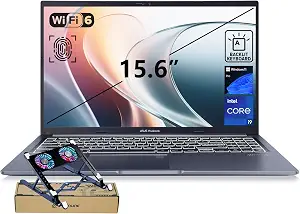
Best Budget is the editorial label for the ASUS Vivobook 15, a straightforward option to consider if you want a conventional laptop layout and a clearly specified set of core components. Its Intel Core i9-13900H processor is paired with 32 GB of memory and 1 TB of storage. Those details give shoppers concrete points to check against the applications and files they expect to use. They do not, by themselves, guarantee a particular result in any workload, so consider your own software requirements rather than treating the component list as a performance promise.
The display is listed as 15.6″ FHD with a resolution of 1920 x 1080 pixels. That makes the screen format easy to compare with the size and resolution you prefer for everyday reading, documents, browsing, or viewing media. The product also lists Windows 11 Pro, a backlit keyboard, and a fingerprint reader. Those are useful details to weigh if the operating system, typing setup, or sign-in method matters to your routine; the listing does not provide grounds here to assume any other software, security feature, or keyboard behavior.
For a Black Friday shortlist, this model’s appeal is its balance of familiar notebook form and specified memory and storage, not an unverified discount. Check that the exact offer names the ASUS Vivobook 15 and shows the processor, 32 GB memory, 1 TB storage, and display configuration you intend to buy. The Best Budget label is a guide to how this selection is positioned within this article, not a claim that it is the least expensive option available. If you are comparing it with a more specialized design, decide whether the dual-screen format or gaming-oriented graphics in the other picks would actually serve your plans before paying extra for a feature set you may not need.
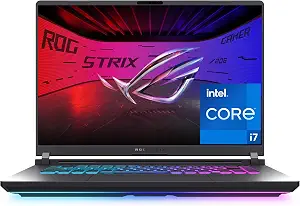
ASUS ROG Strix G16 (2025) Gaming Laptop (ASIN B0DZZWMB2L)
The ASUS ROG Strix G16 (2025) carries the Best Overall label in this guide. Its listed configuration brings together an Intel Core i7 Processor 14650HX, NVIDIA® GeForce RTX™ 5060 graphics, 16GB DDR5 memory, and a 1TB Gen 4 SSD. The gaming-laptop name and dedicated graphics make it the natural model to examine if gaming is central to your decision. The supplied specifications do not establish how a particular game will run, so use the games and software you care about as a checklist rather than expecting a guaranteed experience from the component names alone.
Its display is listed as 16” FHD+ 16:10 165Hz/3ms. The format, refresh-rate figure, and response-time figure are relevant details for shoppers who specifically want to compare display characteristics for games or other fast-changing visuals. Consider whether those stated qualities matter to your use, while remembering that the listed figures are not a substitute for checking the complete product listing. This model also specifies Wi-Fi 7 and Windows 11 Home, which may help narrow a shortlist if those are requirements you have already identified.
For Black Friday, treat Best Overall as an editorial shorthand for this guide’s featured mix, not a measured ranking against every ASUS laptop. Check the exact listing and selected variant for the processor, graphics, memory, storage, display description, wireless specification, and operating system before considering the offer. A lower headline price would not settle whether this configuration is right for you if its key features do not match your priorities. Conversely, if gaming is not a reason you want dedicated graphics or the listed display format, compare the Vivobook’s more conventional layout or the Zenbook Duo’s two-screen approach instead of choosing this model solely because of its label.
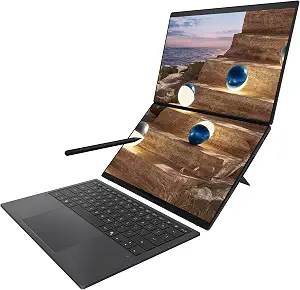
Best for multi-screen workflows is the editorial label for the ASUS Zenbook Duo Laptop (2026). Its defining listed feature is a pair of 14” OLED 3K 144Hz touch displays. That arrangement is worth considering if your routine involves keeping separate kinds of content visible, such as a working document alongside reference material. The product facts establish two displays, but do not specify an ideal application layout or promise that every workflow will benefit. Think through how you would use the second screen before making it the deciding reason to buy.
The Zenbook Duo lists an Intel Core Ultra 9 Processor 386H, 32GB RAM, and 1TB SSD. WiFi 7 is also specified. For practical comparison, write down the software you expect to use, how much local storage you want, and whether the listed wireless standard is important to your setup. The processor and memory details identify the configuration, but the available facts do not support claims about battery life, application speed, or how it compares in performance with another laptop.
Its listed connections are 2× Thunderbolt 4, 1× USB 3.2 Gen 2, and 1× HDMI 2.1 FRL. A sleeve and stylus are included. Those specifics give you items to verify against the way you plan to connect or carry the laptop, without assuming unlisted accessories or compatibility. During Black Friday, confirm that the exact offer is for the ASUS Zenbook Duo Laptop (2026) and that the dual-display configuration, listed ports, and included items match the product page. The Best for multi-screen workflows label reflects the two-display feature, not a claim that this layout is right for every buyer.
Key specs
Display
Dual 14” OLED 3K 144Hz Touch Display
Processor
Intel Core Ultra 9 Processor 386H
Memory
32GB RAM
Storage
1TB SSD
Wireless
WiFi 7
Ports
2× Thunderbolt 4, 1× USB 3.2 Gen 2, and 1× HDMI 2.1 FRL
Included accessories
Sleeve and Stylus Included
Turn your routine into a feature shortlist
Before opening Black Friday listings, describe what you need the laptop to make easier. A person who mainly wants a familiar screen and keyboard can begin with the Vivobook 15’s 15.6″ FHD display, backlit keyboard, and fingerprint reader. Someone choosing around gaming can focus on the ROG Strix G16’s NVIDIA® GeForce RTX™ 5060 graphics and its stated display format. A routine that benefits from two visible work areas may point toward the Zenbook Duo’s dual touch displays. These are starting points, not conclusions about which machine will perform best for an individual.
Make a short list of must-haves and preferences. For example, decide whether an operating system is fixed by your needs, whether storage capacity is a priority, and whether a particular screen arrangement would be genuinely useful. Distinguish these requirements from attractive extras: a feature can be appealing without affecting your daily tasks. Then compare the models by matching each stated feature to a real activity you expect to do. This keeps Black Friday browsing focused on fit rather than a countdown, headline, or label. If a listing omits a detail you need to decide, treat that as something to verify, not permission to assume the answer.
Read each display as a different workspace
Screen descriptions are more useful when considered in relation to your surroundings and routine. The Vivobook 15 lists a 15.6″ FHD display and a 1920 x 1080 pixel resolution. The ROG Strix G16 lists a 16” FHD+ 16:10 display with 165Hz/3ms. The Zenbook Duo specifies dual 14” OLED 3K 144Hz touch displays. Those are distinct configurations, so first ask what you prefer: a conventional single-screen setup, the Strix’s listed display characteristics, or two touch displays.
Avoid choosing from one display detail in isolation. A stated refresh rate or resolution does not tell you how a screen will feel in your room or with your preferred content. Likewise, two screens are useful only if your work or entertainment makes use of the arrangement. During Black Friday, open the exact product listing and check that its display description corresponds to the product variant in your cart. If the display is a deciding factor, make it an explicit comparison point alongside the processor, memory, and storage. That approach is more dependable than inferring a screen feature from a model family name or relying on a brief promotion headline.
Give the component list a job to do
Processor, memory, and storage can look like an easy way to rank laptops, but their usefulness depends on what you plan to run and keep on the machine. The Vivobook 15 lists an Intel Core i9-13900H processor, 32 GB memory, and 1 TB storage. The ROG Strix G16 lists an Intel Core i7 Processor 14650HX, 16GB DDR5, and a 1TB Gen 4 SSD. The Zenbook Duo lists an Intel Core Ultra 9 Processor 386H, 32GB RAM, and a 1TB SSD. Use these as exact configuration details, not as unsupported promises about speed.
Think about your regular applications, the size and location of your files, and any requirements set by work or school. If the operating system matters, note that the Vivobook lists Windows 11 Pro while the ROG Strix lists Windows 11 Home; no operating system is provided in the Zenbook facts here. Check the full listing for any information you need before deciding. Black Friday can make it tempting to compare only the processor name or storage figure, but a worthwhile choice is the configuration that satisfies your needs without relying on assumptions about missing details. Write down the specific component or software requirement that would rule a model in or out.
Black Friday listing checks that prevent mix-ups
A promotion headline is not a configuration guarantee. Before comparing any Black Friday offer, confirm the product name and selected variant, then compare the product page with the specifications that matter to you. For the Vivobook, that might mean checking its processor, display, memory, storage, Windows 11 Pro, backlit keyboard, and fingerprint reader. For the ROG Strix, verify the graphics, memory, storage, display, Wi-Fi 7, and Windows 11 Home. For the Zenbook Duo, look for its dual-display description, processor, memory, storage, ports, WiFi 7, and included sleeve and stylus.
Keep a note of any unanswered question rather than filling gaps with expectations. Product listings can present variants together, so make sure the selected configuration—not just the general product family—matches what you meant to compare. Review the complete offer details before purchasing, including the product identity and the features shown for that selection. This guide does not establish current prices, discounts, stock, or promotion terms. Instead, it gives you a practical way to check whether the offer you see is for the laptop and configuration you actually want. If the listing does not settle an important question, pause and verify it before treating the offer as a match.
Decide which extras earn space on your list
Some details do not fit neatly into processor-versus-price comparisons but can still influence everyday convenience. The Vivobook’s backlit keyboard and fingerprint reader may be relevant preferences, while the ROG Strix lists Wi-Fi 7 and the Zenbook Duo lists WiFi 7, specified ports, a sleeve, and a stylus. Consider each item in context: does it answer a real need, or is it simply a detail you would be unlikely to use? Do not infer other accessories, connection options, or security functions from the product names.
Connections deserve the same practical review. Compare the Zenbook Duo’s listed 2× Thunderbolt 4, 1× USB 3.2 Gen 2, and 1× HDMI 2.1 FRL with the connections you expect to use, and consult the listing for any other model if ports are essential to your setup. Do not assume that a port or accessory is present because it is common on another laptop. In Black Friday comparisons, extras can help distinguish two otherwise plausible choices, but they should not distract from essential requirements. Choose the laptop whose confirmed features support the sequence of tasks you actually intend to do.
Make your Black Friday choice
The right ASUS laptop depends on the shape of your routine: a conventional notebook configuration, a gaming-focused component mix, or a dual-screen workspace. The Vivobook 15, ROG Strix G16, and Zenbook Duo each present different details to weigh, and their labels in this guide are editorial signposts rather than proof of superiority. For Black Friday, compare the exact product and selected configuration against your own must-have list, and verify details on the listing before acting. A considered match is more useful than an appealing offer for a setup that does not fit your plans.