Best Good Laptop Buying Guide — Black Friday Deals 2026
A good laptop is the one whose operating system, screen, memory and connections suit the work you actually plan to do. This Black Friday guide compares three different starting points: a student-oriented Windows laptop, an ASUS Chromebook, and a Lenovo V15 with a broad set of wired ports. Their configurations point toward different priorities, so a low offer alone should not decide the shortlist. Before choosing, identify the software you need, how much local storage you expect to use, and whether you will connect accessories. Then compare the exact listing and configuration available to you. Black Friday can be a useful moment to shop, but the right fit still depends on those practical details.
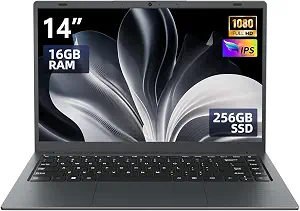
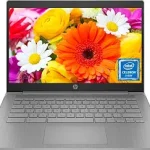
Best Overall is the editorial fit for shoppers who want a student-oriented setup with a clear combination of everyday-use features. The listed configuration pairs a Pentium 6500Y processor (7W) with 16GB RAM and a 256GB SSD. That gives a buyer concrete memory and storage figures to consider before deciding whether the laptop suits their intended workload. For school tasks that involve keeping documents and other files locally, the SSD capacity is relevant; think about the size and number of files you expect to keep rather than treating any capacity as universally sufficient. The processor is also an important part of the decision, so check that it aligns with the software you need.
The 14.0″ IPS FHD (1920×1080) screen gives this model a defined display size and resolution to compare with your workspace. It may be a practical screen format for a student considering a laptop for a desk, shared space, or a bag, but the supplied details do not state its weight or dimensions, so check those separately if portability is a deciding factor. A webcam cover is named in the product title, which may appeal to someone who prefers a physical way to cover the camera. Its battery is specified as 5000mAh (7.4V); that is a capacity statement, not a runtime promise, so do not translate it into a number of hours.
Two USB 3.2 Gen1 ports give you a specific connection detail to compare against your planned accessories. Consider whether the equipment you intend to attach uses those ports and whether you would need other connection types; the listed facts do not establish additional port options. For Black Friday, compare the exact product configuration and listing rather than assuming an offer applies to every version. This is the Best Overall editorial choice among these three products, not a claim of measured superiority or a market-wide award. It makes most sense as a starting point for a shopper who values the stated RAM, SSD and FHD display, after confirming the processor and software fit.
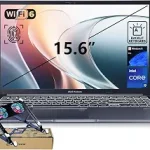
ASUS Chromebook Laptop Student Business 2024 (ASIN B0DFDWN8RT)
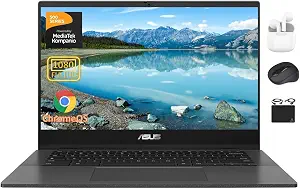
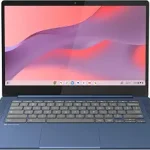
Best Budget is the editorial label for this ASUS Chromebook, reflecting its position as the Chromebook option in this selection rather than a verified price advantage. Its 8-Core MediaTek Kompanio 520 processor, 4GB RAM and 128GB (64GB eMMC+64GB Card) storage describe a different configuration from the two Windows laptops here. The right question is whether that arrangement matches your routine, not whether one specification alone settles the choice. If your work depends on particular applications, confirm that they support Chrome OS before adding this model to a Black Friday shortlist. That operating-system check can prevent a tempting offer from becoming a poor fit for a required tool.
The 14″ FHD Anti-Glare Display is specified at 1920 x 1080 pixels, giving you useful screen details to compare with your preferred workspace. The integrated privacy shutter is another clearly stated feature for shoppers who want a built-in webcam privacy measure. Wi-Fi 6 and Bluetooth 5.3 combo are listed for wireless connectivity, which may matter if your routine depends on wireless networking or Bluetooth devices. The available facts do not specify which accessories are included, so check the exact listing if you need to know what comes with the laptop. Likewise, do not infer other hardware details from the Chromebook name alone.
The stated battery life is up to 15-hour battery life. Keep the words “up to” in view: this is the product’s qualified claim, not a guarantee of how long it will last in your particular routine. When comparing Black Friday offers, verify that the listing is for this exact ASUS configuration and decide whether Chrome OS, the stated memory and storage, and the privacy shutter meet your needs. Best Budget is an editorial choice among the listed products, not evidence of a specific price, discount, or savings. This Chromebook is worth considering when its operating system and stated features line up with what you need.
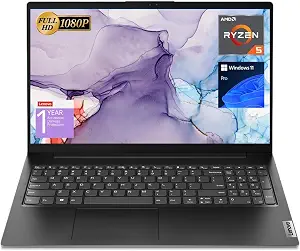
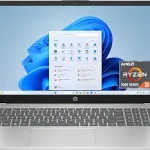
Best for Port Variety is the editorial label for the Lenovo V15, based on its listed mix of connection types. It has a 15.6″ diagonal, FHD (1920 x 1080) display and an AMD Ryzen 5 5500U Processor (6 Cores, 12 Threads, 8MB L3 Cache, Clock Speed:2.1GHz, up to 4.0GHz Turbo). Those details give shoppers a concrete basis for checking whether the screen and processor suit their plans, without implying that a specification guarantees a particular experience. Its listed 16GB RAM and 512GB PCIe NVMe M.2 Solid State Drive are also useful comparison points for someone deciding how much memory and local storage their routine calls for.
The laptop runs Windows 11 Pro. If you rely on particular software, check its requirements and compatibility rather than assuming that the operating system alone answers every question. The listed ports are one USB 3.0 Type-A, one USB 2.0 Type-A, one USB Type-C, one HDMI, and one RJ45. That selection may be relevant if your setup calls for a mix of wired peripherals, a display connection, or an Ethernet connection; match the port types to your own equipment before buying. A Numeric Keyboard is also specified, a detail worth considering if entering numbers is part of your regular workflow.
For a Black Friday comparison, start by confirming that the offer refers to the Lenovo V15 with these listed components, then assess whether its screen, storage and port selection suit your plans. The configuration makes this model a candidate for shoppers who want several stated wired connection options, but the label does not prove superiority in a test or across the wider laptop market. The product details do not state battery life or wireless specifications, so do not use assumptions about either to make the decision. Best for Port Variety is a narrow editorial signpost: it points to the listed connection mix and leaves the rest of the choice to your requirements.
Key specs
Display
15.6″ diagonal, FHD (1920 x 1080)
Processor
AMD Ryzen 5 5500U Processor (6 Cores, 12 Threads, 8MB L3 Cache, Clock Speed:2.1GHz, up to 4.0GHz Turbo)
Memory
16GB RAM
Storage
512GB PCIe NVMe M.2 Solid State Drive
Operating system
Windows 11 Pro
Connectivity
1 x USB 3.0 Type-A, 1 x USB 2.0 Type-A, 1 x USB Type-C, 1 x HDMI, 1 x RJ45
Keyboard
Numeric Keyboard
Write down the work before comparing listings
A useful shortlist starts with tasks, not promotional language. Note which applications you need, whether they must run on a particular operating system, and whether your usual work depends on keeping files on the laptop. The ASUS uses Chrome OS, while the Lenovo is listed with Windows 11 Pro; the student laptop’s operating system is not specified in the supplied details, so confirm it in the exact listing if it matters. This first filter is especially helpful during Black Friday, when an appealing offer can draw attention away from a software requirement that should decide the purchase.
Next, describe an ordinary day rather than an idealized one. A student may prioritize a screen for reading and writing, while someone working with number entry may notice the Lenovo’s Numeric Keyboard. If the routine involves a webcam, the ASUS privacy shutter and the student laptop’s webcam cover are stated features to compare. These details do not tell you how every task will feel, but they let you ask more focused questions. Keep a short list of must-haves and preferences, then remove products that do not meet the requirements you have confirmed.
Choose an operating system you can work with
The operating system affects which applications and workflows belong on your shortlist. The ASUS is identified as a Chromebook running Chrome OS; the Lenovo’s listed system is Windows 11 Pro. The student model’s provided facts do not identify an operating system, so check that detail directly before treating it as a match. Do not assume that an application, peripheral, or workflow will work simply because a laptop is described as suitable for students or business. Confirm requirements from the software or service you depend on.
This check is worth doing before comparing Black Friday offers, not after. If you already know that your essential tools require a particular platform, use that need to narrow the field first. If you are flexible, compare the listed configurations and determine whether you are comfortable with the relevant software environment. A product title is not a substitute for checking the exact configuration or its operating system. Keeping this question separate from price also makes it easier to see whether a deal is genuinely relevant to your needs rather than simply attention-grabbing.
Set expectations for memory and local files
Memory and storage answer different shopping questions. RAM is one configuration detail to consider alongside the applications and workload you expect; storage describes the capacity available for files on the listed device. The ASUS lists 4GB RAM and 128GB (64GB eMMC+64GB Card) storage, while the student laptop lists 16GB RAM and a 256GB SSD. The Lenovo lists 16GB RAM and a 512GB PCIe NVMe M.2 Solid State Drive. These are descriptions, not guarantees that a device will suit every workload.
Think through the files you expect to keep locally: class materials, documents, or other items relevant to your routine. If you already use another storage approach, consider whether the listed capacity still makes sense for the files you want on the laptop. Do not treat the storage labels as interchangeable; read the configuration carefully and check the exact listing during Black Friday. A better decision comes from matching the stated capacity to your habits, not choosing a model solely because one number looks larger. If your needs are uncertain, write down what you currently store and what you expect to add.
Let screen details serve your workspace
The three listed screens provide concrete details, but your setting should guide the comparison. The student laptop specifies a 14.0″ IPS FHD (1920×1080) screen; the ASUS lists a 14″ FHD Anti-Glare Display at 1920 x 1080 pixels; and the Lenovo has a 15.6″ diagonal, FHD (1920 x 1080) display. Consider where you usually work, how much screen space you prefer, and whether the ASUS anti-glare description matters to your setup. These details help frame a choice, but they cannot establish how a display will look in every environment.
Also separate screen preference from portability assumptions. The supplied facts do not give the laptops’ weights or dimensions, so do not infer how easy one is to carry from screen size alone. If you expect to move between rooms or take a computer to class, look up those physical details on the exact listing before deciding. During Black Friday, compare configurations that actually match the screen you want; product names and offer graphics may not communicate every specification. A deliberate screen choice begins with your workspace and ends with confirming the listed display details.
Use a Black Friday checklist, not a guess
Before choosing an offer, confirm the product identity and configuration shown on the listing. Match the operating system, processor, memory, storage and display details against the model you put on your shortlist. Then check the connections that matter to you: the Lenovo lists several port types, the student laptop specifies two USB 3.2 Gen1 ports, and the ASUS provides wireless details including Wi-Fi 6 and Bluetooth 5.3 combo. Do not assume that a feature from one configuration applies to another version of a product.
Treat claims with their stated limits. The ASUS battery wording is “up to 15-hour battery life,” while the student laptop’s fact is a battery capacity of 5000mAh (7.4V); they are not equivalent measures. The Lenovo’s supplied facts do not state a battery figure. Avoid turning either a capacity or a qualified runtime claim into a promise about your own use. Black Friday may make comparison convenient, but no price or discount is provided here. Decide using the exact offer in front of you, the requirements you confirmed, and the features that matter to your routine.
Make your Black Friday choice
The strongest choice is the one that fits your software, workspace and connection needs—not simply the one with the most attention-grabbing Black Friday message. The student laptop offers a stated 16GB RAM and 256GB SSD configuration; the ASUS Chromebook brings Chrome OS, an anti-glare FHD display and a qualified battery-life claim; the Lenovo V15 lists Windows 11 Pro and a varied port selection. Use those differences to decide what to verify in the exact listing. Black Friday can be a good time to compare, but confirm the configuration and your must-haves before committing. A clear checklist turns a broad search for a good laptop into a more informed choice.